

The best premium gaming chairs of 2026 don’t buy you better biomechanics—they refine execution: tighter adjustment control, more stable support, higher build quality, longer warranties, stronger after-care, and accessory ecosystems that make posture variation easier to sustain.
Below are the best premium gaming chairs of 2026 (esports-grade, full-back models), ranked by the tradeoffs that actually matter.
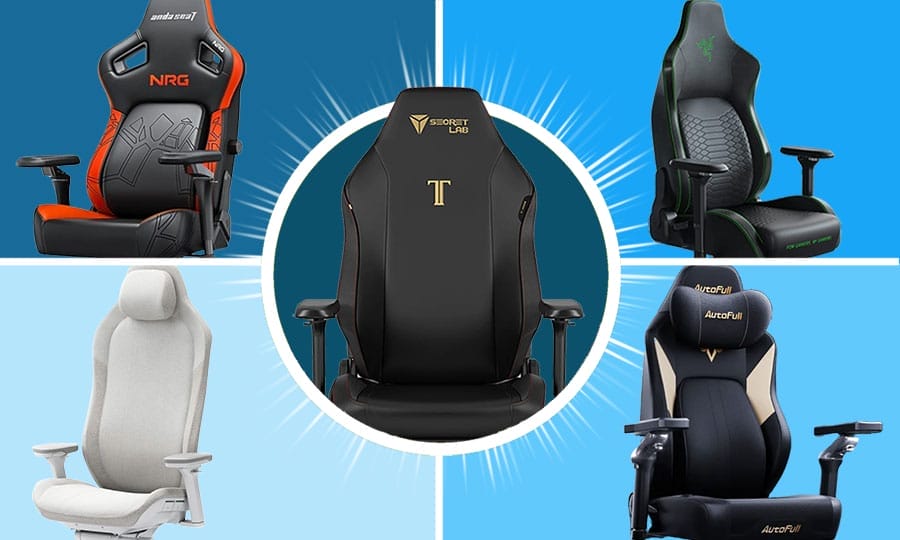
The modern era of premium gaming chairs was defined in 2021, when Secretlab distilled years of pro-player feedback into the Titan Evo chair. It set a new baseline for how ergonomic features, build quality, and customer experience should come together in one product.
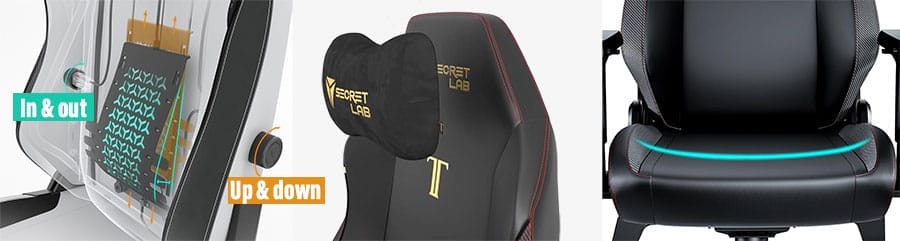
Many competitors quickly responded with near-identical layouts — proof that Secretlab had set the template. But few pushed the technology further.
By 2024, that began to change. The Fractal Refine arrived as a streamlined gaming–office hybrid, showing evolution beyond the Titan Evo’s “bucket-seat” formula with office-chair mechanisms and aesthetics.
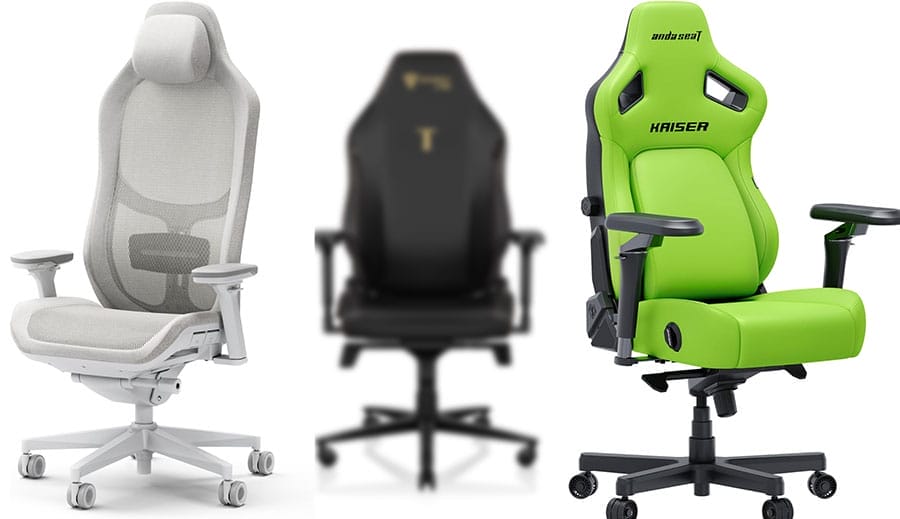
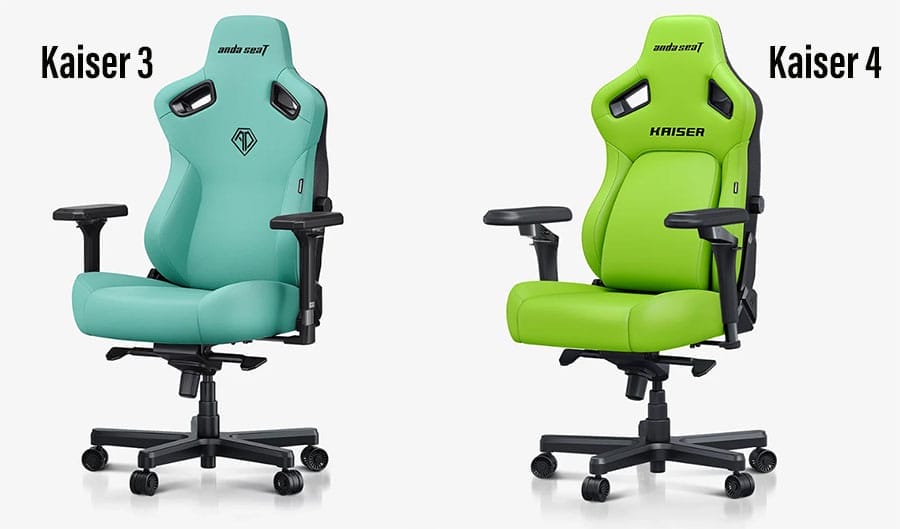
A year later, rivals such as AndaSeat and Razer raised the bar further with innovations like 6D armrests and multi-axis lumbar support. By 2026, the result is a premium gaming chair market that feels genuinely competitive.
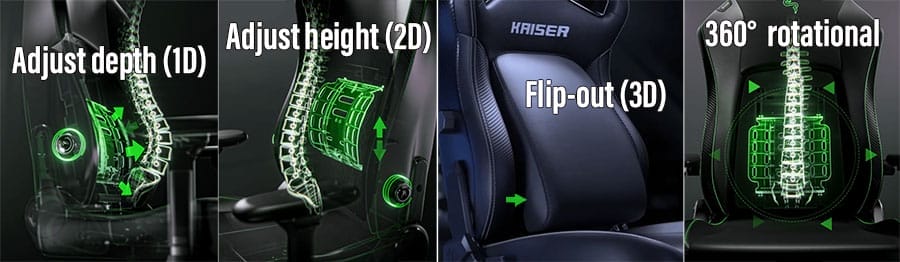
While the Titan Evo remains the baseline for modern excellence, the best rivals now build on that standard with more adjustability, new mechanisms, and increasingly modular ecosystems.
Best Premium Gaming Chairs Ranked
All chairs in these rankings include 5-year warranties (excluding the Autofull M6, which is guaranteed for 3 years):
| Rank & Model | Best for | Avoid if | Price |
| 1. Secretlab Titan Evo | Users who want firm, precise posture support, a highly stable seat base, and the strongest accessory ecosystem | You prefer plush, forgiving seat padding or dislike firm seating | $579 from Secretlab |
| 2. AndaSeat Kaiser 4 | Those who want maximum adjustability and a softer, more forgiving seating feel | You prioritize postural precision and long-term foam stability over comfort | $539 from AndaSeat |
| 3. Razer Iskur V2 | Users who want the most configurable lumbar system and enjoy fine-tuning back support | You’re price-sensitive or expect clear ergonomic gains beyond adjustability | $649 from Razer |
| 4. Fractal Refine | Gamers who prefer office-chair mechanics (sync-tilt, seat-depth adjustment) in a gaming format | You have a broader build or need generous usable seat width | $499 on Amazon (varies by upholstery) |
| 5. Autofull M6 Ultra 2.0 | Buyers who enjoy luxury extras and advanced armrest experimentation layered onto solid baseline ergonomics | You want a purely performance-driven chair without electronic gimmicks | on Amazon |
| 6. DXRacer Craft Series | Those who want Titan Evo-style ergonomics at a lower price with a long warranty | You’re looking for functional innovation beyond established designs | $499 on Amazon |
How We Ranked
Chairs were ranked using hands-on testing (Titan Evo, Kaiser 4, Iskur V2, DXRacer Craft), reviewer feedback, and cross-referenced long-term owner reports, with emphasis on:
- Support stability: seat base and lumbar consistency under load
- Adjustability range: armrests, lumbar control, and recline behavior
- Build quality: materials, mechanisms, and overall finish
- Fit accuracy: real-world sizing versus manufacturer claims
Secretlab Titan Evo
$579 from Secretlab | Ranked #1
Released in late 2021, the Titan Evo set the benchmark for the modern premium gaming chair: integrated 2D lumbar support, a strapless magnetic headrest, excellent build quality, and strong warranty-backed support.
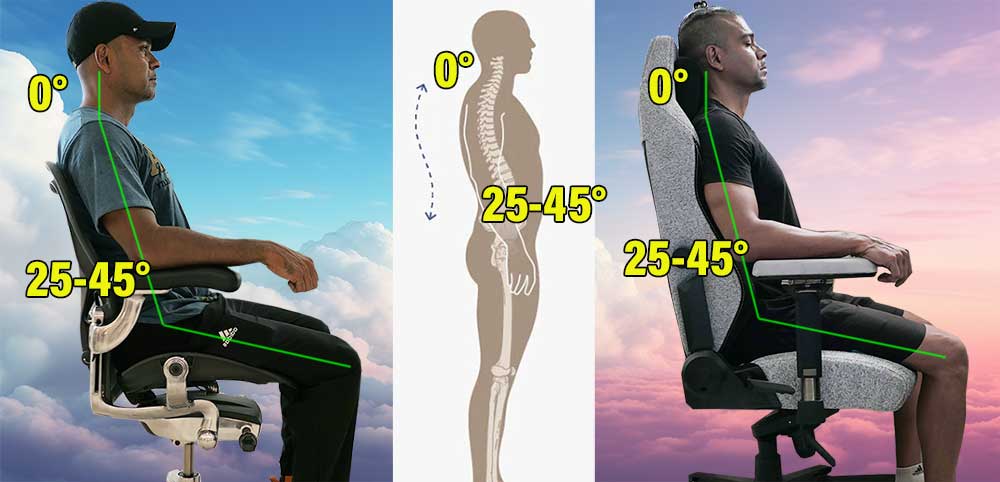
It didn’t invent new biomechanics. Rather, it made neutral posture support easier to dial in, setting a standard competitors quickly copied.
Why ranked #1: Even as competitors have caught up on individual features, the Titan Evo remains the most complete “benchmark package”: consistent build quality, huge style variety, strong after-care, and the most developed add-on ecosystem in the category.
Titan Evo at a Glance
ChairsFX Rating: 4.5 out of 5.0 stars
- Concept: Customizable support for both strict neutral postures and more relaxed, free-form sitting
- Highlight features: height x depth adjustable lumbar support; magnetic headrest; spacious seat pan
- Size rating: 3 sizes, covering users from 4’11” to 6’9″
- Warranty: 5 years
- Supports clean neutral postures without feeling restrictive
- When properly adjusted, feels so comfortable that you forget you’re sitting
- Huge selection of over 60 upholstery and color options
- Offers more optional add-ons than any competing chair
- After-care support is responsive and easy to reach
- Some users complain the seat feels too firm.
- Requires user discipline: It doesn’t force upright posture. Slouching can feel comfortable, so posture quality depends on habits and setup.
- Fabric upholstery variants require frequent deep cleaning to maintain appearance and hygiene
Titan Evo Features
The Titan Evo pioneered the integrated height x depth adjustable lumbar support system and a strapless magnetic headrest concept. Today, many brands mirror these ideas because they’re simple, effective, and easy for users to fine-tune.

One thing to note is the firm 65 kg/m³ padding density – some users complain it’s too stiff. This is by design: firmness supports even, balanced posture, while softer seats promote imbalances. Even so, if you don’t like firm seats, this chair isn’t for you.
- Functionality: 4D armrests; multifunction tilt-lock; recline from 85-165°.
- Upgraded Features: integrated 4-way adjustable lumbar support; magnetic headrest pillow; pebble seat base with waterfall edge; CloudSwap armrest caps.
- Upholstery: Neo Hybrid Leatherette (50+ styles); Softweave Plus Fabric (15 styles).
- Seat padding: 65 kg/m³
- Warranty: five years.
Titan Evo Sizing
Titan Evo chairs are available in small, medium, and XL sizes. For best results, stick with Secretlab’s suggested size ratings, which our tests found accurate.
| Specification | Titan Evo Small | Medium | XL |
| Seat | 17.7″ (W) x 18.9″ (D) | 18.5″ (W) x 19.3″ (D) | 19.3″ (W) x 19.7″ (D) |
| Backrest | 20″ (W) x 32.3″ (H) | 21″ (W) x 33.5″ (H) | 22″ (W) x 35″ (H) |
| Seat height | 17.7″ to 20.5″ | 17.7″ to 20.5″ | 18.1″ to 21.9″ |
| Size rating | 4’11” to 5’6″; 285 pounds | 5’7″ to 6’2″; 285 pounds | 5’11” to 6’9″; 395 pounds |
Fitting advice: Titan Evo Sizing Guide.
Titan Evo Advice
I’ve been using a Titan Evo full-time for over four years. In my experience, it offers more consistent neutral posture support than most gaming chairs—primarily because its lumbar and headrest systems are easy to fine-tune and stable once dialed in.
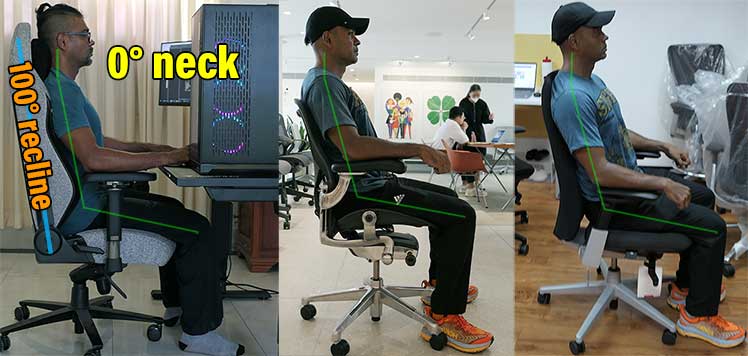
It also offers a level of posture support comparable to pricey ergonomic office chairs — because the fundamentals are the same: adjustable lumbar support, adjustable armrests, and a recline mechanism that helps you return to neutral.
Early into my Titan Evo journey, I focused on learning to maintain sharp neutral postures, then practiced moving frequently between “clean posture” stints and relaxed positions.
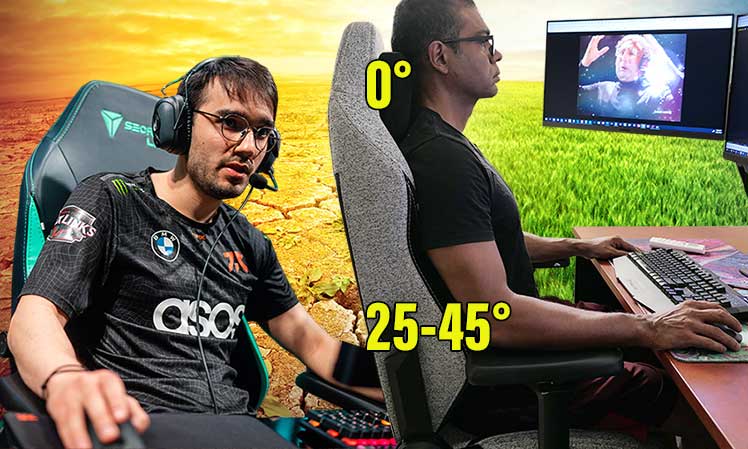
This approach gives you the best of both worlds: the freedom to sit how you want, paired with a chair that makes it easy to “reset” back into a clean neutral posture throughout the day.
Final verdict: The Titan Evo remains the reference point for premium gaming chairs: strong baseline ergonomics, excellent build quality, and the deepest add-on ecosystem—plus the customer support and warranty coverage that competitors now benchmark against.
Titan Evo (m) from Secretlab $579
The Titan Evo is also available on Amazon for $669
AndaSeat Kaiser 4
$539 from AndaSeat | $549 on Amazon | Ranked #2
The AndaSeat Kaiser 4 is a clear example of the post–Titan Evo evolution cycle. It adopts Secretlab’s core template (integrated lumbar support and a magnetic headrest), then pushes the design further through expanded adjustability.
The first upgrade is its 6D armrests. Beyond standard height, width, pivot, and depth adjustments, the Kaiser 4 adds full rotation and tilt, allowing finer tuning for keyboard, mouse, controller, and mobile-device use.
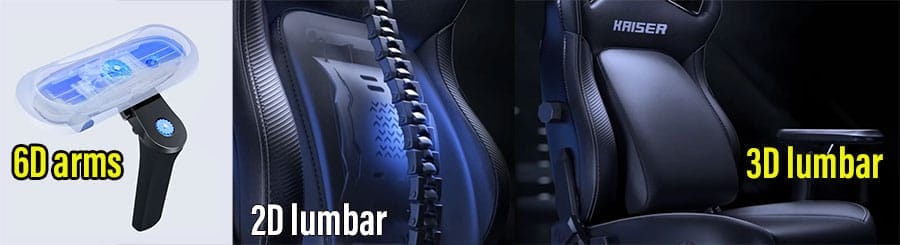
The second upgrade is its 3D lumbar support. In addition to height and depth adjustment, the lumbar can flip outward by 24°, giving users more control over how aggressively the lower back is supported.
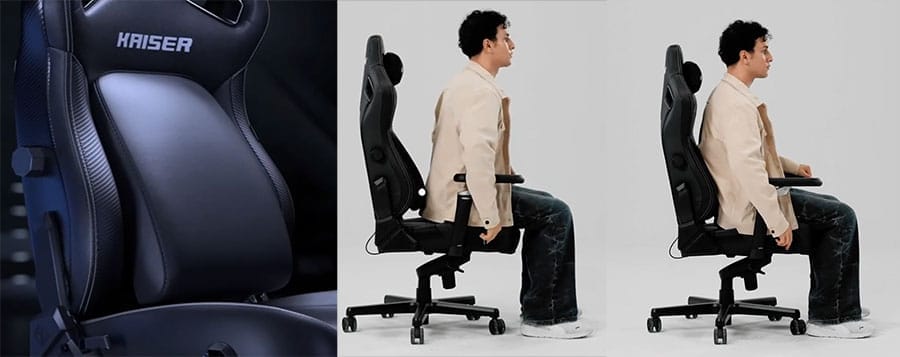
This design also enables something the Titan Evo does not explicitly offer: a quasi “backless” mode, where the lumbar provides structure – while the upper back is held upright primarily by the user’s own musculature.
Why ranked #2: On paper, the Kaiser 4 is more adjustable than the Titan Evo. In practice, its softer padding trades some postural precision for comfort. Choose the Titan Evo for stable neutral support; choose the Kaiser 4 for more flexibility and adjustability.
Kaiser 4 at a Glance
ChairsFX Rating: 4.0 out of 5.0 stars

- Concept: Titan Evo–style baseline with expanded adjustability and a softer seating feel
- Highlight features: height x depth x angle adjustable lumbar support; magnetic headrest; 6D armrests (height, width, pivot, depth + tilt + 360° rotational)
- Size rating: For sizes 5’8″ to 6’11” (L and XL models)
- Warranty: 5 years
- Flashy 6D arms and flip-out lumbar exceed the Titan Evo features
- Softer seat cushioning improves comfort during long sessions
- Solid overall build quality
- Softer padding reduces postural precision compared with firmer chairs like the Titan Evo
Titan Evo vs Kaiser 4 Padding Density
The Kaiser 4 has the same 65 kg/m³ seat padding density as the Secretlab Titan Evo, but feels significantly softer. This is because the Kaiser 4 has an extra layer of softer foam laid atop the core block.
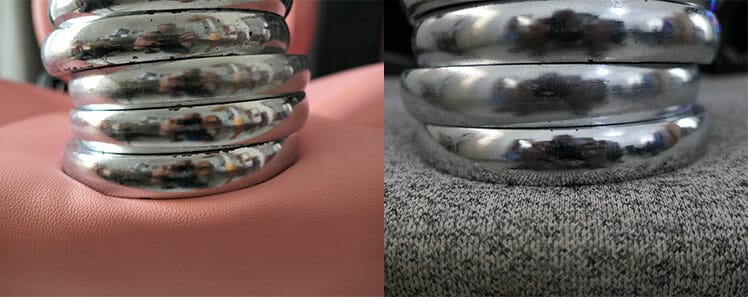
The difference is significant. While the Titan’s seat feels firm, the Kaiser 4 seat feels softer and squishier.
Kaiser 4 Sizing
The Kaiser 4 comes in large and XL versions:
| Spec | Kaiser 4 Large | Kaiser 4 XL |
| Seat | 20.6″ (W) x 20″ (D) | 21.8″ (W) x 21″ (D) |
| Backrest | 21.2″ (W) x 31.5″ (H) | 22.2″ (W) x 32.6″ (H) |
| Seat height | 17.5-20″ | 17.5-20″ |
| Size rating | 5’11” to 6’10”, 396 pounds |
Kaiser 4 Features

The Kaiser 4 replicates the Titan Evo’s best features; its flashy flip-up lumbar and 6D armrests exceed them:
- Lumbar support: integrated, height and depth-adjustable; flip up component
- Headrest: magnetic strapless memory foam pillow with cooling gel insert
- Padding: 65kg/mᶟ one-piece molded foam
- Adjustments: 90-165° recline; 6D armrests; multifunction tilt lock
- Warranty: 5 years
Kaiser 4 Advice
On paper, the Kaiser 4’s additional armrest degrees of freedom and flip-out lumbar make it functionally more adjustable than the Titan Evo.
In practice, I found the softer cushioning reduces how precisely the chair “holds” a neutral posture once set. This isn’t a flaw — it’s a tradeoff.
Verdict: The Kaiser 4 represents the next evolution of the Titan Evo template: more adjustability, more comfort, and more configuration options. If you value versatility and softer seating, it’s an excellent choice. If you prioritize maximum postural precision and stability, the Titan Evo remains the stronger benchmark.
Learn more: Kaiser 4 Vs Titan Evo Compared
The Kaiser 4 is also available on Amazon for $549
Razer Iskur V2
$649 from Razer | Ranked #3
The latest Iskur V2 upgrades its flip-out lumbar support concept with full 6D adjustability. The upgraded version now adds height- and depth-adjustable control, plus a 360° swivel mechanism that adapts the entire lumbar unit as the user moves.
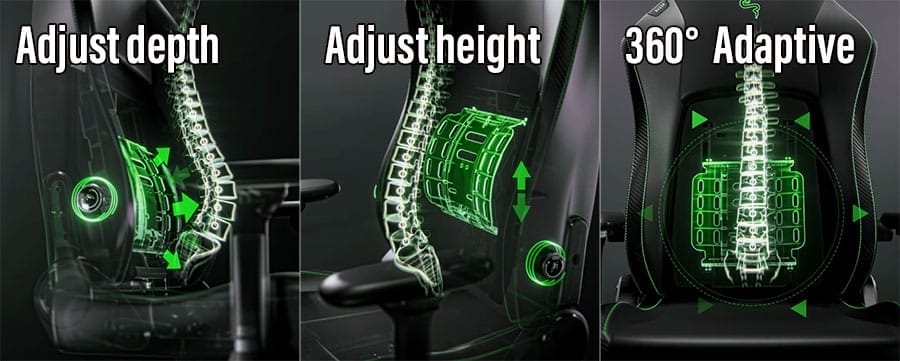
Rather than introducing a new ergonomic principle, this system emphasizes maximum configurability — giving users more ways to fine-tune how lumbar pressure is applied as they move.
Why ranked #3: While its feature set and build quality are comparable to the Kaiser 4, the Iskur V2 costs over $100 more. Much of that premium reflects Razer branding rather than a clear ergonomic advantage.
Iskur V2 at a Glance
ChairsFX Rating: 4.0 out of 5.0 stars

- Concept: Maximum lumbar adjustability layered onto a premium gaming chair baseline
- Highlight feature: 6D lumbar support (flip in-out, adjust height or depth, adapt dynamically with a 360° swivel mechanism)
- Size rating: 5’6″ to 6’2″; 299 pounds
- Warranty: 5 years
- The dynamic 6D lumbar provides more adaptive support than any other model
- 5-year warranty, matching the Titan Evo and Kaiser 4
- Built-in reactive seat tilt, where the seat tilts upward as you recline
- Excellent overall build quality
- No magnetic headrest—the Iskur V2 uses traditional strap-mounted attachment
Iskur V2 Specifications
This chair is well-designed, offering robust adjustability, solid after-care, and a 5-year warranty—but is significantly pricier than the Titan Evo and Kaiser 4.
Functionality
- Highlights: 6D lumbar support, 4D armrests, sync-tilting seat
- Recline: 90-152° with reactive seat tilt (the seat tilts up as you recline)
- Headrest: traditional model with straps
- Upholstery: PVC leather or fabric
- Warranty: 5 years
- Seat: 21.25″ (total W) x 17.3″ (D)
- Backrest: 18.11″ (W) x 32.8″ (H)
- Seat height: 17.9-21.8″
- Size rating: 5’6″ to 6’0″; 299 lbs
Iskur V2 Advice
The Iskur V2’s main drawback is its price. It costs roughly $70 more than the Titan Evo and $140 more than the Kaiser 4, despite all three offering similar baseline ergonomic support.
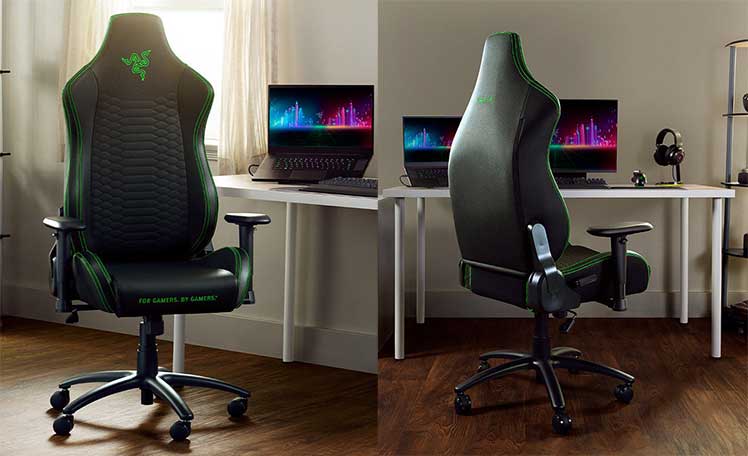
The only clear differentiator is the 6D lumbar system — which, while impressive, is an incremental refinement rather than a fundamental ergonomic leap.
On the downside, the Iskur V2 is available in just three styles, compared with 60+ for the Titan Evo and 14 for the Kaiser 4. Whether the added cost is justified depends on how much value you place on extreme lumbar adjustability.
Fractal Refine
$499 on Amazon | Ranked #4
Fractal Design is a Swedish company known for making premium gaming hardware, including PC cases, cooling solutions, and power supplies. In 2024, Fractal expanded into seating with the release of the Fractal Refine.
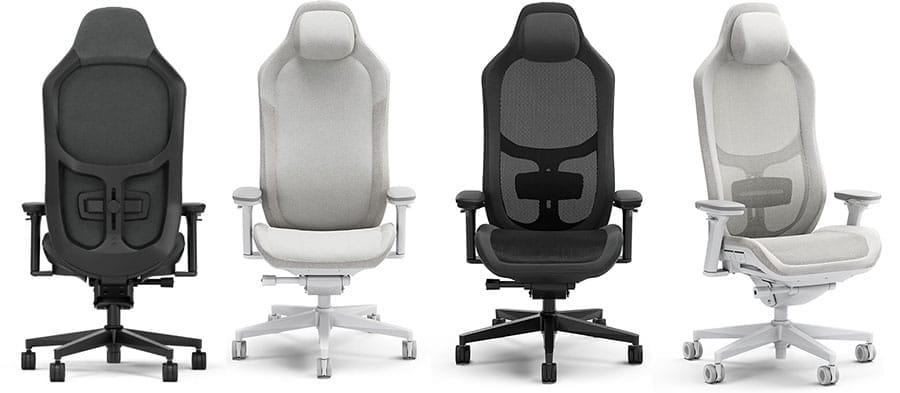
The Refine departs from the traditional bucket-seat gaming chair formula. Instead, it applies office-chair aesthetics and synchronized tilt, within a full-back gaming-chair footprint.
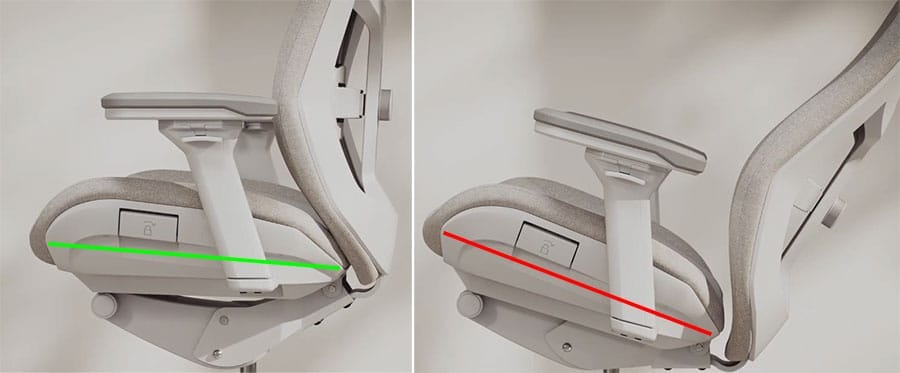
Available in mesh or padded fabric, the Refine is designed to perform the core ergonomic functions: adjustable lumbar support, armrests, & recline that guides users into clean neutral postures.
The distinction from other gaming chairs lies in how its features are delivered – through office-chair mechanisms rather than a bucket-seat design.
Why ranked #4: The Refine prioritizes restraint and office-chair mechanics over feature density. It’s well executed, but its shorter market history makes long-term durability harder to assess.
Fractal Refine at a Glance
ChairsFX Rating: 4.0 out of 5.0 stars
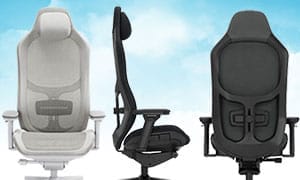
- Concept: Straightforward neutral posture support in a clean, understated design that blends office and gaming chair aesthetics
- Size rating: 5’2″ to 6’6″; 275 pounds
- Warranty: 5 years on mechanical parts, 3 years on soft parts (upholstery, padding, armrest caps, headrest)
- Hubless casters reduce noise and better absorb shock
- Lightweight yet sturdy glass fiber–reinforced frame with aluminum wheelbase
- Includes adjustable seat depth and smooth synchronized tilt
- Available in nylon-reinforced mesh, fabric, or synthetic leather upholstery
- The height x depth-adjustable lumbar works well, but feels like a crude plastic block compared to the smooth Titan Evo support
- Narrow seat width: although billed as 21.25″ wide, raised seat bolsters reduce usable space to roughly 18″
Fractal Refine Functionality
Equipped with refined office-chair features, the Refine also shares a common office chair limitation: the headrest supports reclined postures, but not upright ones with the backrest set at a steep 100°.

At that angle, the Titan Evo’s headrest compresses around the neck. By contrast, the Refine’s less compressible pillow may encourage users to hinge the neck forward, rather than maintain a neutral head position.

Also, as noted in the Cons, this is a chair for slim users. In real use, the bolsters make the seat feel noticeably narrower than the headline width suggests.
Beyond these quibbles, the Refine chair’s specs are impressive:
Functionality
- Lumbar support: height x depth adjustable.
- 4D armrests: height, width, pivot, depth.
- Clip-on neck pillow: height adjustable (4.7″).
- Recline: 90-125° (flexes to 130° under load).
- Sync tilt: seat tilts up by 1° for every 2° of recline.
- Adjustable seat depth: 2″.
- Warranty: 5 years on mechanical parts, 3 years on soft parts (upholstery, padding, armrest caps, headrest).
- Seat: 21.25″ (total W) x 16.7-18.8″ (mesh 17.7″ to 19.8″) (D)
- Backrest: 20.8″ (W) x 34.4″ (H)
- Seat height: 18.7-22.4″
- Size rating: 5’2″ to 6’6″; 275 pounds
Fractal Refine Advice
The Fractal Refine suits users who dislike bucket-style gaming chairs – but still want full-back support and deep recline. It replaces thick padding with leaner upholstery and relies on synchronized tilt and seat depth adjustment to manage posture.
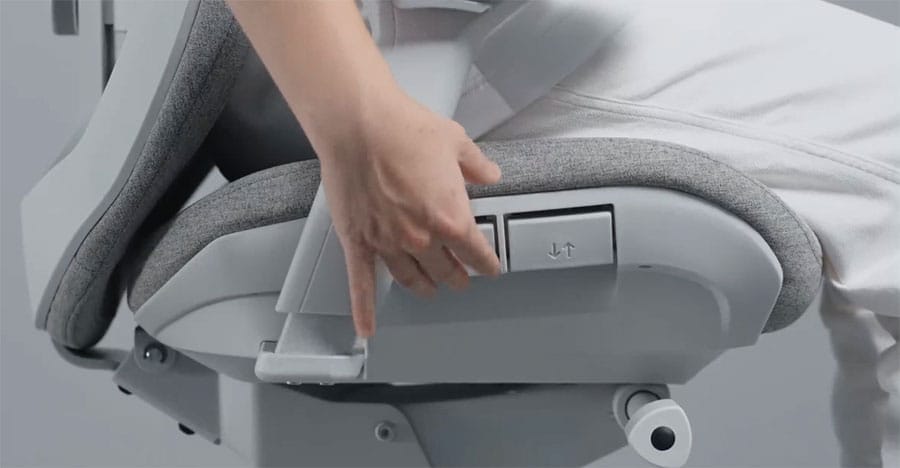
These seat functions deliver everything an office-chair purist expects, while preserving the full-back and deep-recline support benefits of the gaming chair format.
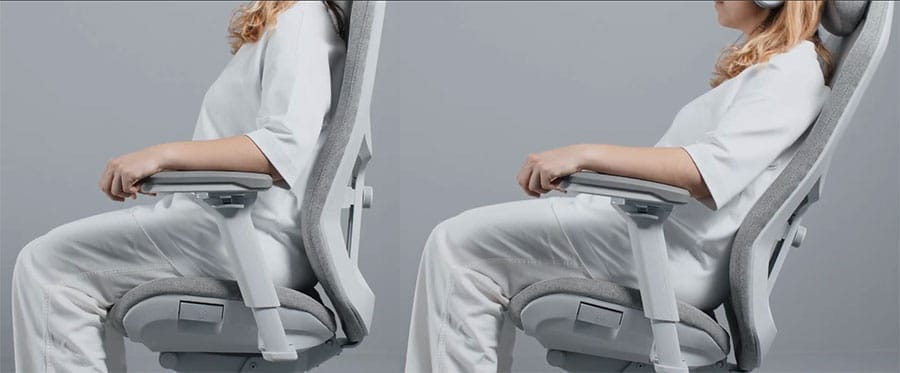
Verdict: The Refine represents a side-branch of the Titan Evo template — less about feature density, more about mechanism choice. For slimmer users seeking a restrained, office-chair–influenced take on gaming chairs, it’s a strong alternative.
Autofull M6 Ultra 2.0
on Amazon | Ranked #5
In 2020, Autofull released its first Mechanical Master chair, introducing mechanical arms optimized for mobile and console gaming. The concept was ahead of its time and sold poorly, but Autofull continued to refine it. The M6 Ultra 2.0 is the latest iteration.
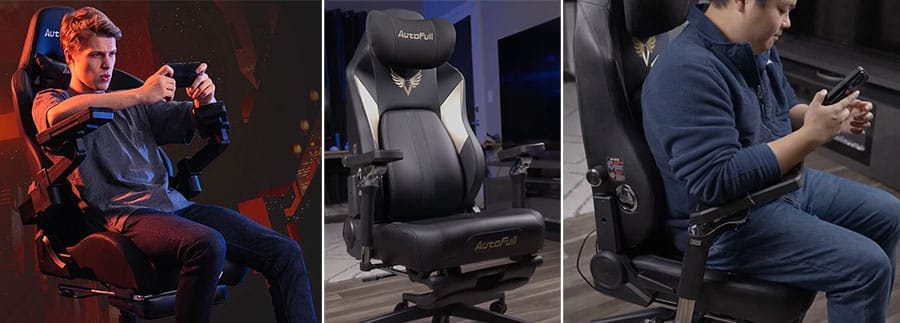
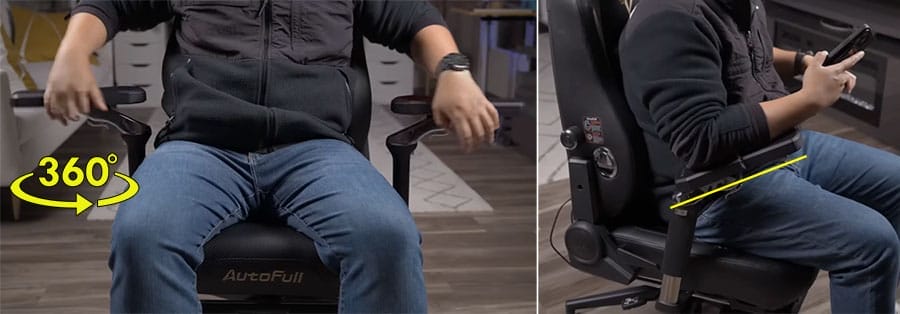
The modern armrests closely mirror the 6D armrests on the AndaSeat Kaiser 4: adjust for height, width, pivot, depth, tilt, and 360° rotation. Unlike the original model’s fully flexing mobile support, the current design tilts upward to support handheld device use.
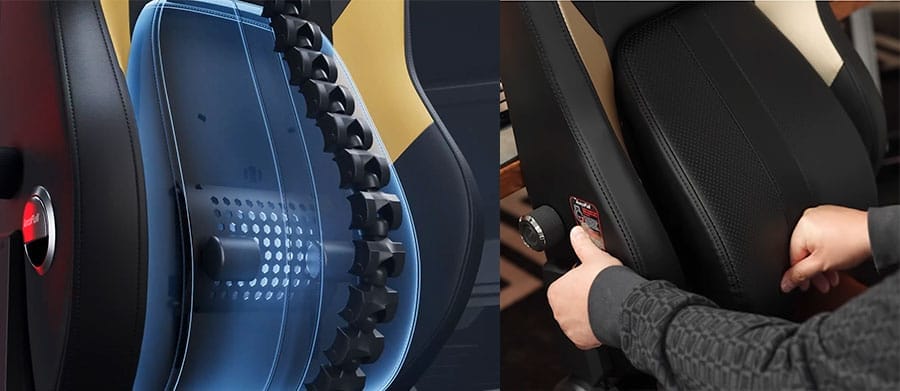
Beyond the armrests, the chair includes a 3D lumbar support system comparable to the Kaiser 4, layered with luxury extras such as a heated seat, cooling fans, massage functions, and a retractable footrest.
Why ranked #5: This is essentially a Kaiser 4 with added luxury features—massage, seat temperature control, and a footrest—aimed at buyers willing to pay extra for novelty. The shorter 3-year warranty further limits its appeal at this price point.
Autofull M6 Ultra at a Glance
ChairsFX Rating: 4.0 out of 5.0 stars
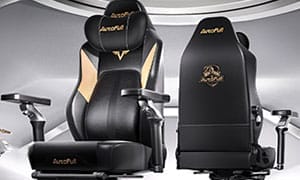
- Concept: Advanced lumbar support and armrests with back massage and seat temperature controls
- Highlight features: adaptive 2D lumbar support, 6D armrests, massage and seat temperature controls
- Size rating: 5’7″ to 6’4″; 330 pounds
- Warranty: 3 years
- Height x depth adjustable lumbar support with tracking that adapts as the user moves
- Best in class 6D armrest adjustability: height, width, depth, pivot, tilt, and 360° rotation
- Comfortable headrest pillow
- Impressive heat and cooling fan controls on the seat
- Solid build
- No multifunction tilt: you can rock the seat or lock it upright, but not lock at angles (standard in other premium chairs)
- Massage and temperature controls require an external USB battery pack
- Although marketed for sizes 5’2″ and up, the 20″ seat depth realistically suits sizes 5’7″ and up
- Long-term durability of the massage and temperature electronics is uncertain
- Massage and temperature features feel more like luxury gimmicks than meaningful ergonomic upgrades
- The 3-year warranty falls short of the 5-year standard set by competitors
M6 Ultra 2.0 Functionality
Functionality
- Lumbar support: adaptive; height (1.9″) x depth (3.94″) adjustable .
- 6D armrests: height, width, pivot, depth + tilt + 360° rotational.
- Clip-on neck pillow: depth (1.26″) and height (3.94″) adjustable.
- Luxury extras: deep back massager, battery-powered heating and cooling fan seat controls, retractable footrest.
- Recline: 90-160°, rock or lock upright modes (no seat tilt lock).
- Warranty: 3 years.
- Seat: 20″ (total W) x 20″ (D)
- Backrest: 20.2″ (W) x 32″ (H)
- Seat height: 16.3-19.5″
- Size rating:
5’2″5’7″ to 6’4″; 330 lbs
M6 Ultra 2.0 Advice
Gimmicks aside, the M6 Ultra 2.0 provides solid baseline neutral posture support through its adaptive lumbar system and wraparound headrest pillow.
At a price comparable to premium competitors, you get a standard (rather than multifunctional) tilt lock and only a 3-year warranty. This suggests the premium price is driven more by luxury extras than by durability or ergonomic completeness. Ergonomic corners were cut.
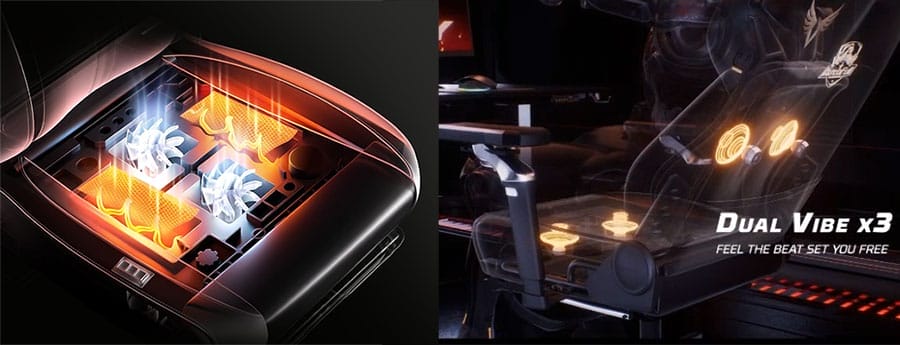
Final advice: This chair is best suited to thrill seekers who want flashy extras layered on top of solid baseline ergonomics. If you’re looking for technical excitement, the combination of 6D armrests, massage, and seat temperature controls should appeal.
DXRacer Craft Series
$499 on Amazon | Ranked #6
The Craft Series is a Titan Evo clone with the same features and 5-year warranty. It differs with a lower price and unique DXRacer styling.
Why ranked #6: This is effectively a Titan Evo clone, offering distinct styling but no meaningful functional or ergonomic differentiation.
DXRacer Craft Series at a Glance
ChairsFX Rating: 4.0 out of 5.0 stars
- Concept: Titan Evo clone with DXRacer styling
- Highlight features: integrated 2D lumbar support, magnetic headrest (same as the Titan Evo)
- Size rating: 5’8″ to 6’3″; 275 pounds (L and XL options)
- Warranty: 5 years
- Includes height x depth adjustable lumbar and strapless magnetic headrest
- Guaranteed for 5 years
- Best suited to slimmer users of average height
- Closely mirrors the Titan Evo design, with no meaningful feature differentiation
DXRacer Craft Series Functionality
- Functionality: 4D armrests; 90-135° recline; multifunction tilt-lock.
- Support: depth-adjustable integrated lumbar; magnetic headrest.
- Warranty: five years.
DXRacer Craft Series Sizing
Chairs are available in medium and XL sizes. Both models suit people of average height or taller:
| Dimension | Craft L | Craft XL |
| Seat pan | 22.65″ (W) x 21.6″ (D) | 22.65″ (W) x 22.2″ |
| Backrest | 20.9″ (W) x 30.9″ (H) | 22″ (W) x 33.2″ (H) |
| Seat height | 18.5-21.5″ | 19.1-22.1″ |
| DXRacer size rating | Up to 6’1″; up to 255 lbs | Up to 6’3″; up to 275 lbs |
| ChairsFX size rating | 5’8″ to 6’1″ | 5’10” to 6’3″ |
DXRacer Craft Series Advice
The Craft Series is a solid chair with good adjustable features designed to last for 5 years. It’s attractive, comfortable, and easy to use.
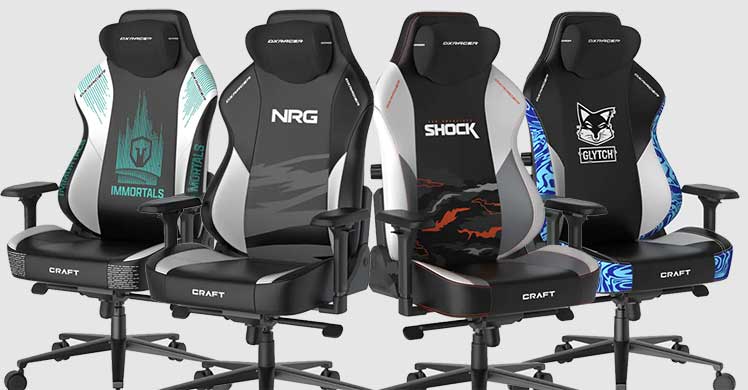
On the downside, it’s a straight-up Titan Evo clone, offering cost savings rather than innovation. If you don’t mind its lack of originality, the Craft Series offers good value for money.
Best Premium Gaming Chair Accessories
While ergonomic seating remains foundational in professional esports, performance research has shifted focus beyond the chair itself. The latest trends increasingly emphasize movement, recovery, and overall workload management rather than perfect sitting posture alone.

In other words, once a chair reliably supports clean neutral postures — as all premium models now do — further gains come from how often users move, not from marginal chair refinements.
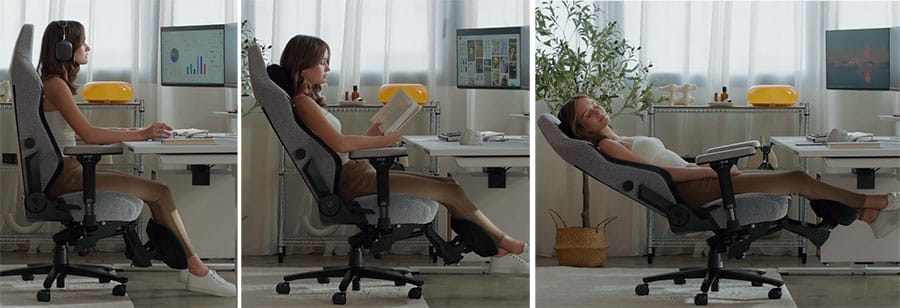
This has pushed the next phase of innovation outward, toward accessory ecosystems that encourage standing, micro-movement, and posture variation across the day.
Premium Chair Accessory Ecosystems
While many brands have focused on matching the Titan Evo’s chair features, Secretlab has gone further by building a broader ecosystem of accessories designed to extend movement beyond the chair itself.
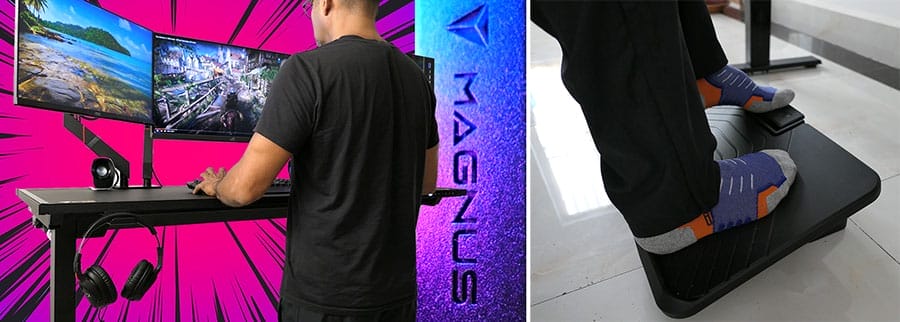
As a result, competitors are beginning to follow the same trajectory—introducing standing desks, footrests, and modular add-ons that treat the chair as just one component of a larger workstation system.
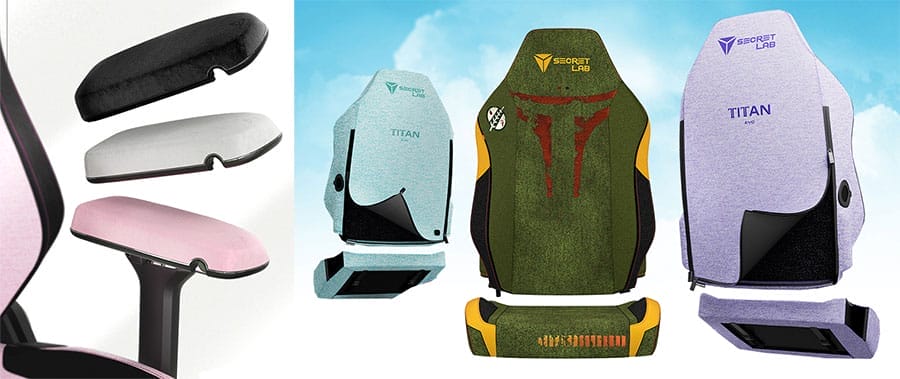
Beyond promoting movement, Secretlab also targets psychological comfort with luxury accessories. Add-ons like fabric Skins and interchangeable armrest caps do not change biomechanics. Rather, they enhance tactile feel, visual cohesion, and long-term satisfaction.
Together, these two trajectories — movement-enabling accessories and experience-focused add-ons — point to the next standard for premium gaming chairs.
The chair itself becomes a stable ergonomic baseline, while performance, comfort, and personalization increasingly come from the surrounding ecosystem.
Secretlab Ecosystem Snapshot
Below are representative examples from Secretlab’s accessory lineup, illustrating where the premium gaming chair category is headed:
| Titan Add-on | Description | Price |
| Armrest caps | Replacement top caps with velour covers and cooling gel inserts → Usability review | $89 |
| Floor-mounted Professional Footrests | Adjustable-angle footrest with easy foot controls → Usability review | $229 |
| Magnus Pro Desks | Height-adjustable luxury desks available in varied styles with many accessories to choose from → Usability review | $948 |
| Retractable footrest | Angle-adjustable retractable footrest attaches under the seat → Functionality review | $229 |
| Fabric skins | Snap-on fabric skins for leatherette chairs | $99 to $169 |
Standing Desk
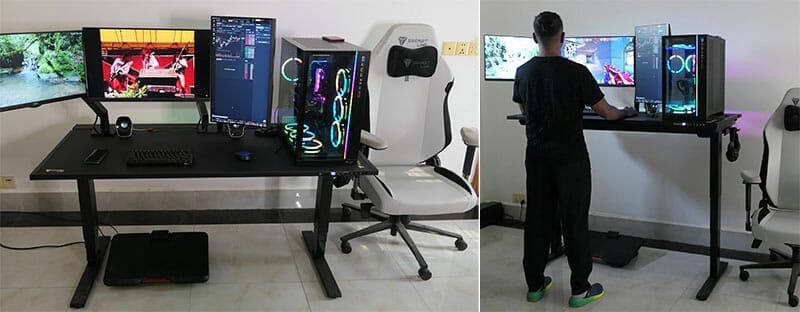
Current esports performance trends consistently favor movement and posture variation over prolonged “perfect” sitting. Once a chair reliably supports neutral posture, standing desks become the most impactful ergonomic upgrade.
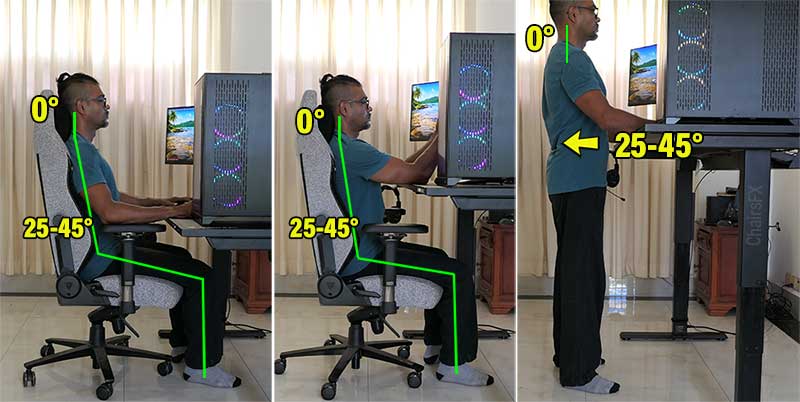
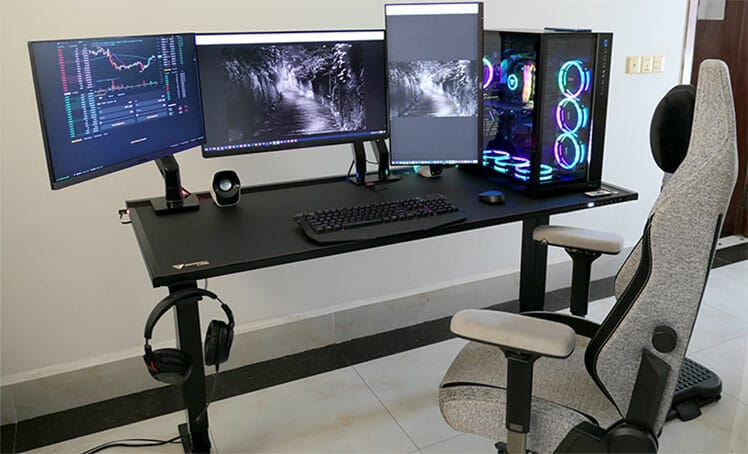
I personally use the Secretlab Magnus Pro at ChairsFX. As a neutral posture fanatic, I rely on it to maintain near-perfect postures across seated work, mobile computing, and standing desk work.
Released in late 2022, the Magnus Pro was a landmark product: the first pro-quality standing desk from a major gaming chair manufacturer. Its all-metal build, high-end cable management, and customization options immediately set a new industry standard.
Following its success, competitors like Autofull and DXRacer have introduced their own variations, confirming the Magnus Pro’s influence as a blueprint for the future.
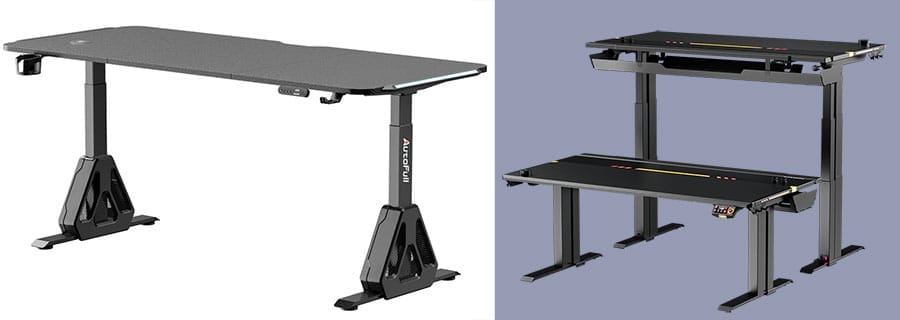
This pattern mirrors the chair market itself: one brand establishes the reference design, and the rest converge on similar solutions.
Ergonomic Footrest
After a standing desk, an ergonomic footrest is the most practical way to introduce movement – while remaining seated.
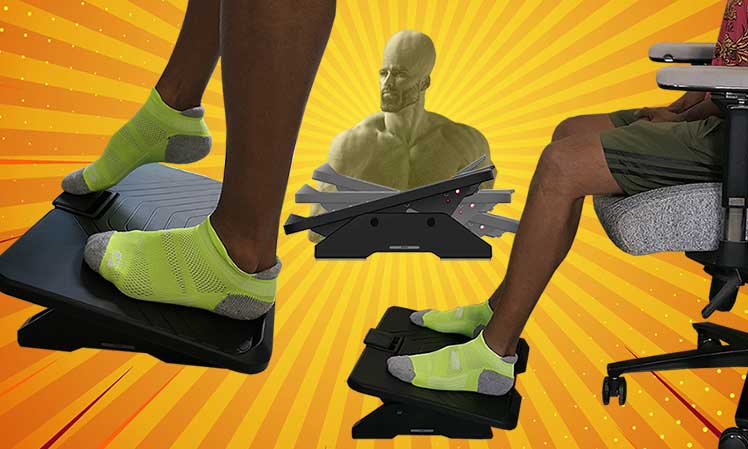
It offers two distinct modes. Stationary mode allows you to lock the footrest at a fixed angle by pressing with your toes while anchoring with your heels. Dynamic mode unlocks the platform, allowing it to rock freely with your foot movements.
Significantly, this kind of passive movement matters more for long-term comfort and circulation than fine differences between chair mechanisms.
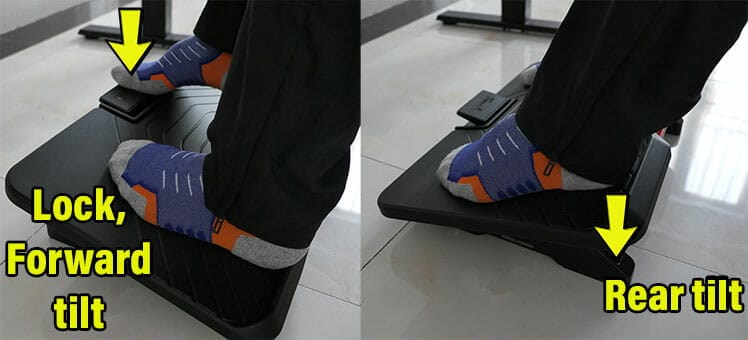
Both modes meaningfully improve lower-body movement and circulation during long sitting sessions. For a more affordable alternative, the Mind Reader Footrest provides basic height adjustment and swivel functionality for just $26.
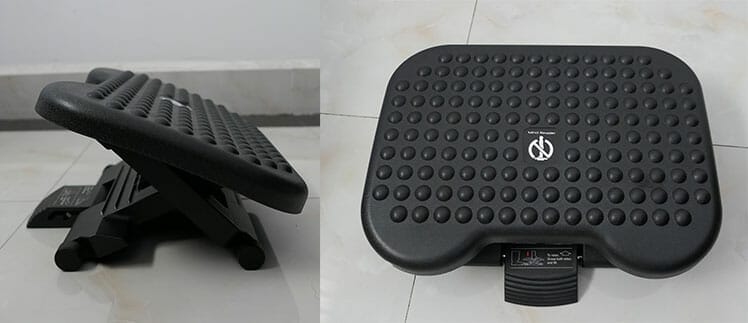
For a broader overview, read our Ergonomic Footrest Guide, which breaks down the benefits and compares budget-friendly options for gamers and desk workers alike.
Beyond individual chair reviews
Below is a deeper dive into the market forces shaping modern premium gaming chairs—from esports adoption to accessory ecosystems. If you’re only looking for final buying advice, you can skip to the conclusion.Gaming Chairs Used by Esports Pros
In the same way premium chairs have caught up to the Titan Evo template, parity is also emerging on the pro esports scene.
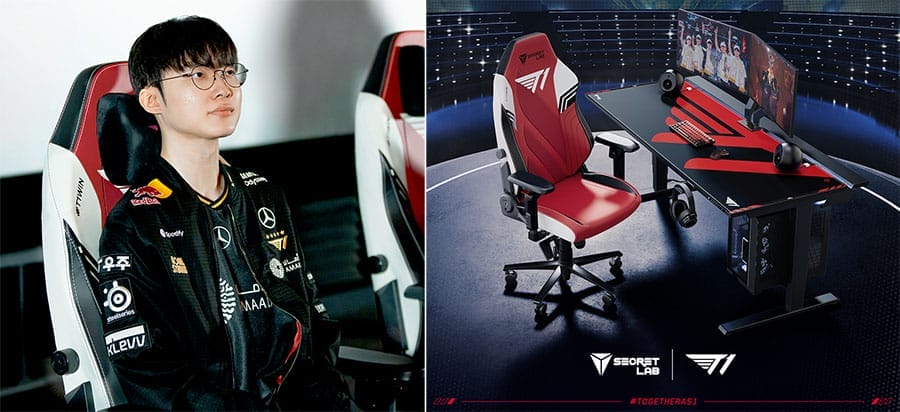
While Secretlab currently retains its grip on premium tournament partnerships, its status as the de facto choice among esports pros appears to be waning.
Chairs Used at Top Tournaments
Secretlab had a clean run in 2024, with its Titan Evo serving as the official chair at all of the most-watched esports events:
| Tournament | Game | Peak Viewership | Official Chair |
| 2024 League of Legends World Championship (Worlds) | League of Legends | 6.94 Million (excluding Chinese viewers) | Titan Evo |
| M6 World Championship | Mobile Legends: Bang Bang | 4.13 Million | Titan Evo |
| Mid-Season Invitational (MSI) 2024 | League of Legends | 2.83 Million | Titan Evo |
| PGL Major Copenhagen 2024 | Counter-Strike 2 (CS2) | 1.85 Million | Titan Evo |
| VCT Masters Madrid 2024 | Valorant | 1.68 Million | Titan Evo |
| The International 2024 (TI 13) | Dota 2 | 1.51 Million | Titan Evo |
Notably, Secretlab has served as the official chair partner for the League of Legends World Championship since 2019: starting with the Titan 2018 edition, since upgraded twice into 2020 and Titan Evo editions.
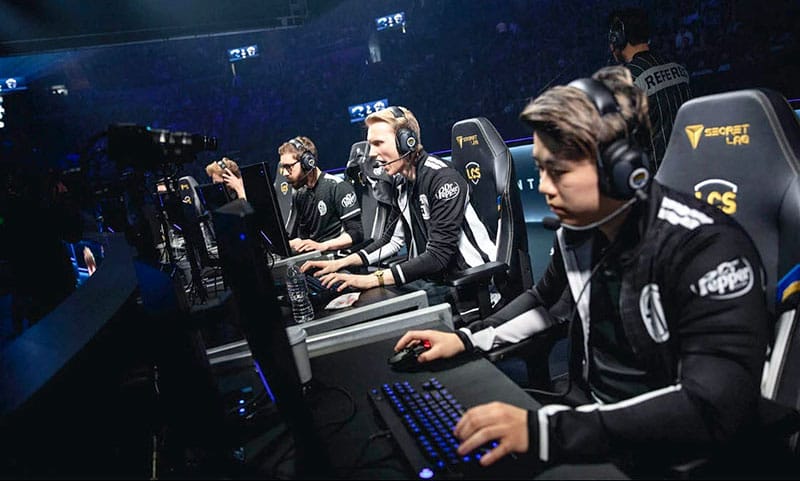
This suggests that tournament chair selection prioritizes durability, consistency, and ease of deployment at scale over fine-grained ergonomic differentiation between premium models.
Chairs Used by Top Esports Teams
Among the top-50 earning esports teams of all time(1) (as of 2025), Secretlab and Razer are the current dominant brands:
- Secretlab: 6 partners (OG, Team Secret, T1, Cloud9, Tundra Esports, Team Vitality)
- Razer: 3 partners (OpTic Gaming, MOUZ, Alliance)
- Blacklyte: 3 partners (Team Liquid, Team Spirit, Fnatic)
- AndaSeat: NRG Esports
Upstart brand Blacklyte makes a surprising appearance, partnering with 3 of the top 6 teams. It’s an aggressive Secretlab clone brand, making near-replica chairs and standing desks.
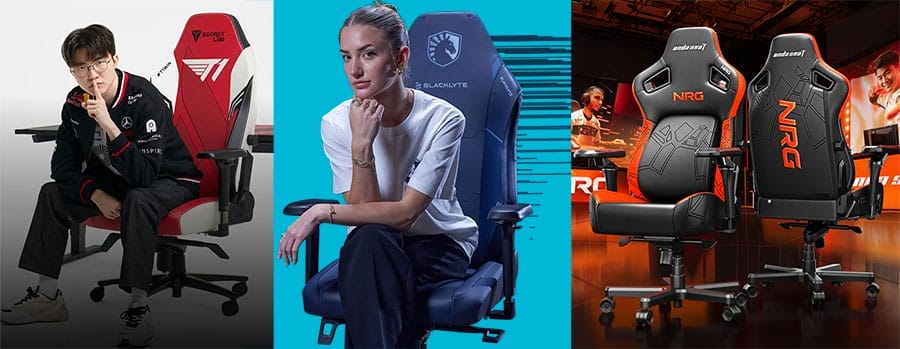
Key takeaway: This distribution reinforces how closely premium gaming chairs have converged—teams increasingly choose between brands offering similar ergonomic baselines rather than meaningfully different seating concepts.
Premium Gaming Vs Office Chairs
Under most institutional guidelines, a chair qualifies as ergonomic if it includes adjustable lumbar support, adjustable armrests, and a reclining backrest.
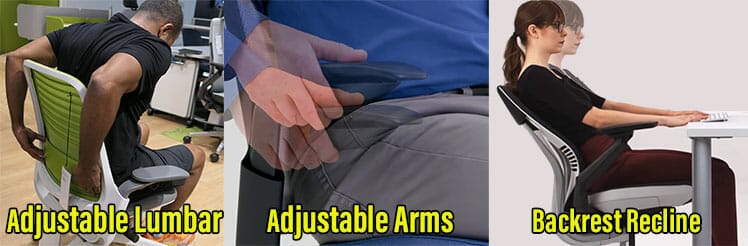
The purpose of these components is to support neutral sitting postures. When used correctly, any chair with this core trio can provide adequate ergonomic support.
High-end ergonomic office chairs often go further by adding complex synchronized tilt mechanisms. However, a 2013 systematic review found that these features offer less benefit than simpler interventions such as frequent standing and walking breaks to restore physical and cognitive performance.

Once advanced (and often unnecessary) sync-tilt mechanisms are set aside, premium gaming chairs and office chairs perform essentially the same job using the same core components.
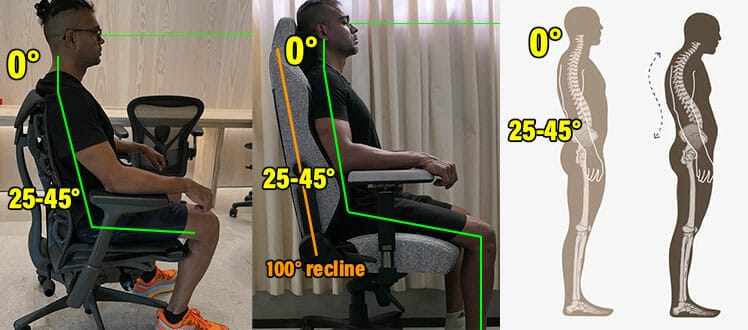
Where they primarily differ is in positioning: premium office chairs priced above $1,000 typically emphasize mid-back support and long 12-year warranties, while gaming chairs are generally cheaper and favor full-back support with deep recline.
Static Vs Dynamic Evolution
Another key difference between premium gaming and office chairs is their pace of innovation. Most high-end office chairs are sold primarily to B2B customers and rely on static designs that haven’t evolved for a decade or more.
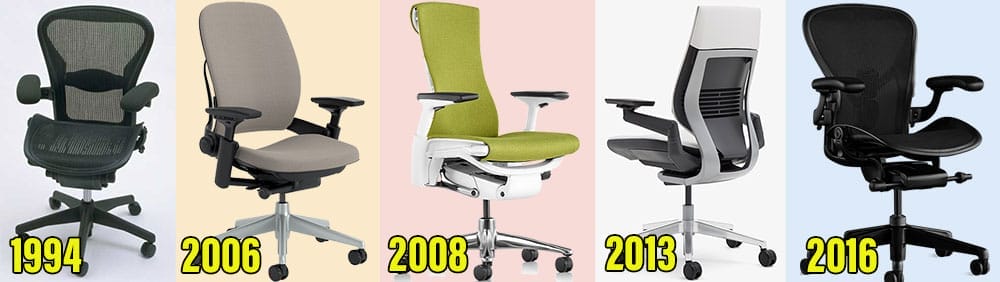
By contrast, gaming chairs are shaped by professional esports use and direct-to-consumer feedback loops. Leading brands iterate more rapidly, introducing new materials, adjustability concepts, and modular accessories at a much faster cadence.

Caveat: Faster iteration reflects responsiveness to consumer feedback, not necessarily superior biomechanics. Still, it acknowledges evolving user and computing habits — rather than rigid concepts rooted in earlier computing eras.
| Model | Release date | Functional updates |
| Steelcase Leap | 1999 | Updated once in 2006 to the Leap V2 |
| Herman Miller Aeron | 1994 | Updated once in 2016 to the Aeron Remastered |
| Secretlab Titan | 2015 | Three updates (2018, 2020, 2022) in 10 years |
| AndaSeat Kaiser 4 | 2022 | Two updates (2023, 2025) in 5 years |
| Razer Iskur | 2020 | One update in 2024 to the Iskur V2 |
Key takeaway: Ergonomically, both chair types solve the same problem. The real distinction is not biomechanical superiority, but speed of innovation—gaming chairs adapt faster to consumer feedback, while office chairs change slowly within long B2B replacement cycles.
Cheap vs Premium Gaming Chairs
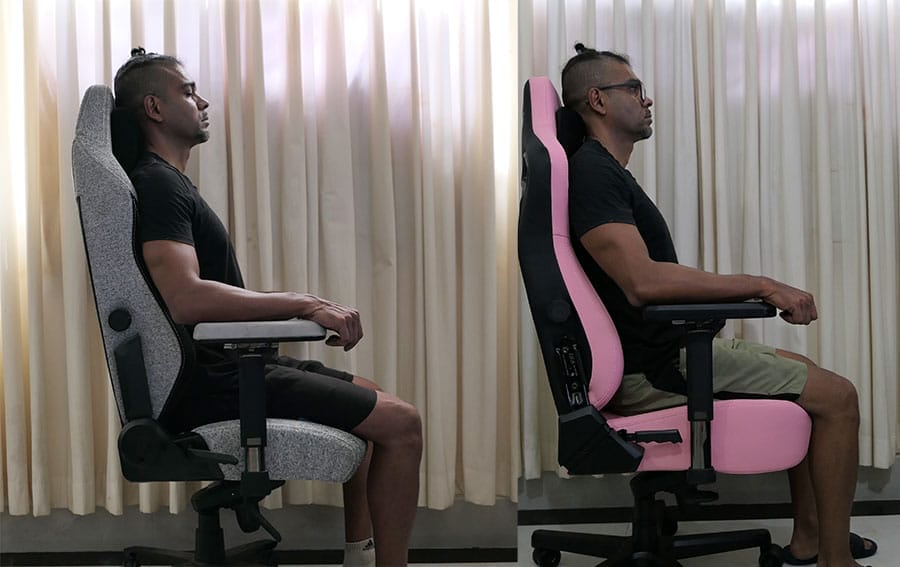
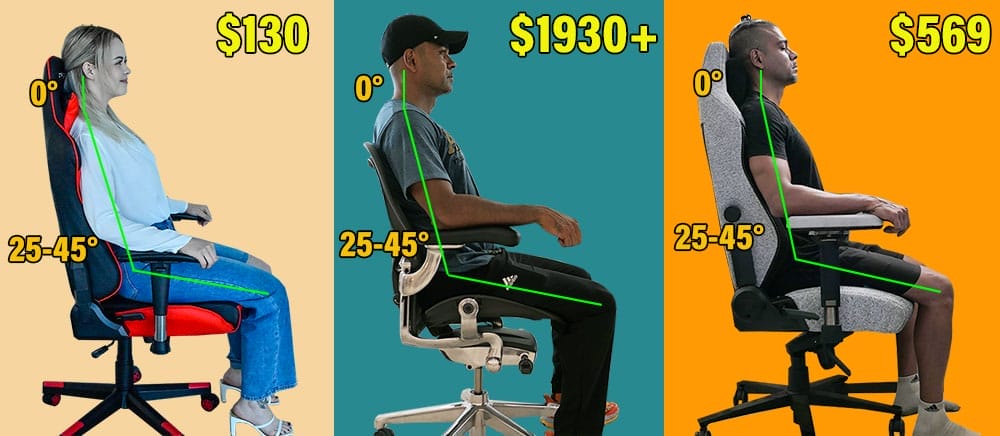
As stated earlier, any chair with adjustable lumbar support, adjustable armrests, and a reclining backrest is capable of supporting clean neutral postures.

As shown in the images above, cheap gaming chairs can support neutral postures just as effectively as premium models.
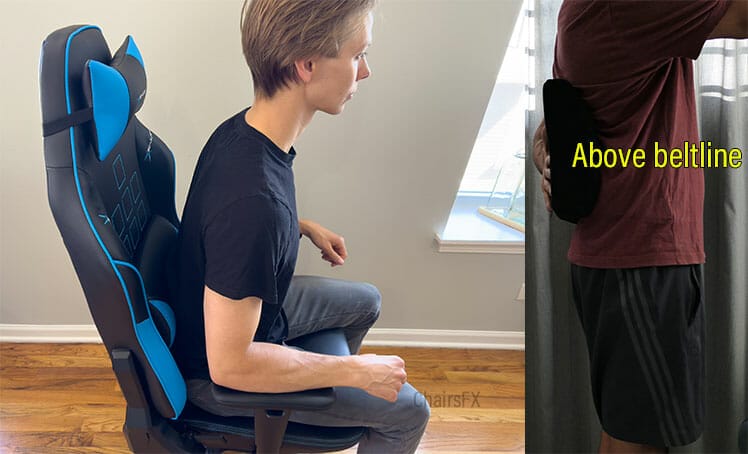
That said, there are clear differences — similar to those between premium gaming chairs and $1,000+ ergonomic office chairs. These differences are primarily about refinement rather than biomechanics:
- Durability: Premium chairs are typically built and warranted for five years or more, while most budget models carry one-year warranties.
- Stability: Premium chairs tend to use firmer, higher-density foam bases, whereas cheaper models rely on softer foam that breaks down more quickly.
- Adjustability: Budget gaming chairs usually offer 1D or 2D armrests and removable foam lumbar pillows. Modern premium chairs feature 4D armrests and integrated, multi-axis lumbar systems.
- Reliability: Premium brands generally provide responsive after-sales support, while budget manufacturers often limit service to shipping-related issues.
Key takeaway: As seen throughout the ergonomic seating industry, paying more does not deliver objectively better back support. Instead, a premium price buys superior adjustability, higher build quality, and greater long-term reliability.
Related: Best Cheap Gaming Chairs Under $200 | Cheap vs Expensive Gaming Chairs
Final Premium Gaming Chair Takeaways
Premium gaming chairs have largely converged on the same ergonomic fundamentals. Once adjustable lumbar support, adjustable armrests, and an adjustable recline are in place, differences between top-tier models are no longer about biomechanical superiority.
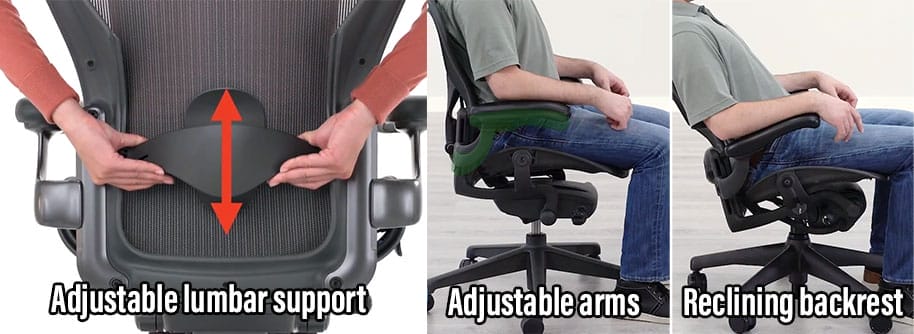
Rather, differences reflect build quality, adjustment precision, durability, and how easily users can maintain clean neutral postures over long sessions.
Since around 2018, Secretlab’s design approach and quality benchmarks — crystallized in the Titan Evo — have helped define this modern template. Many competing brands have since adopted similar core concepts, refining them in different ways.
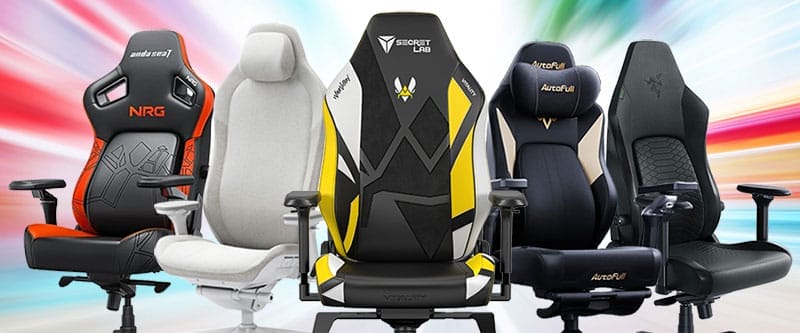
As a result, the following models all reflect this broader shift toward strong baseline ergonomics, continuous iteration, and consumer-focused design, placing them among the best esports-grade premium gaming chairs of 2026:
| Rank & Model | Functional highlight | Main drawback | Price |
| 1. Secretlab Titan Evo | Firm, precise neutral-posture support with a highly stable seat base | Some users find the firm seat padding uncomfortable | $579 from Secretlab |
| 2. AndaSeat Kaiser 4 | More adjustable lumbar support and armrests than the Titan Evo | Softer padding reduces postural precision compared with firmer chairs | $539 from AndaSeat |
| 3. Razer Iskur V2 | Highly configurable 6D lumbar support with multi-axis adjustment | Higher price reflects branding rather than a clear ergonomic advantage | $649 from Razer |
| 4. Fractal Refine | Office-chair sync-tilt and seat-depth adjustment in a full-back gaming format | Narrow usable seat width and less effective upright headrest support | $499 on Amazon (varies by upholstery) |
| 5. Autofull M6 Ultra 2.0 | Advanced armrest adjustability paired with luxury extras (massage, heating, cooling) | Luxury features add cost without improving core ergonomic performance | on Amazon |
| 6. DXRacer Craft Series | Titan Evo clone with a 5-year warranty and a lower price | No meaningful functional differentiation beyond styling | $499 on Amazon |
Beyond chairs themselves, accessory ecosystems point to where the category is heading next. Standing desks, footrests, and modular add-ons that encourage movement and posture variation are becoming just as important as the chair beneath the user.
Final takeaway for buyers: Once a gaming chair offers adjustable lumbar support, adjustable armrests, and a supportive recline, it is capable of supporting healthy neutral posture.
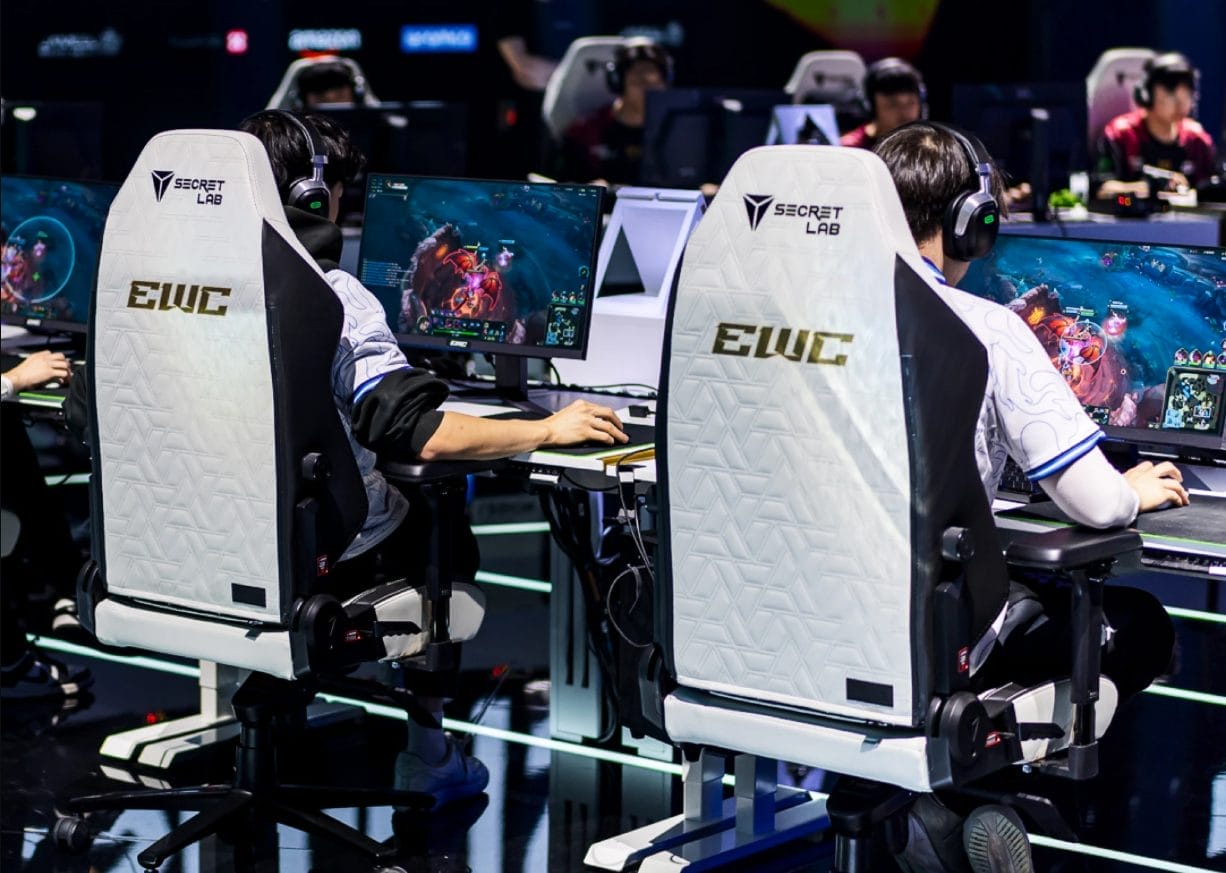
Paying more does not buy better biomechanics — it buys better build quality, finer adjustment control, longer warranties, and accessories that make good posture easier to maintain over time.
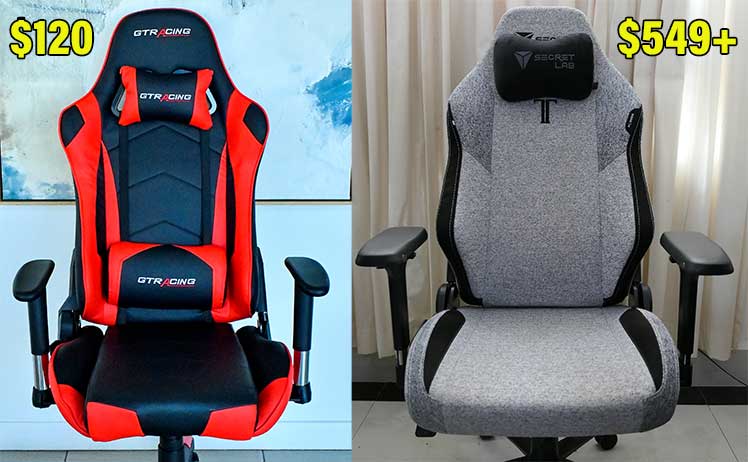
Choose premium if you value precision, durability, and long-term comfort; choose budget if you’re willing to trade refinement for cost savings:
Best Cheap Gaming Chairs Under $200
Footnotes
- ChairsFX Spreadsheet. ‘Top esports team chairs of 2024’, Dec. 15, 2024. Check the spreadsheet + source links (accessed Oct. 25, 2025).
