

Few studies offer a clear, data-backed look at what the modern IT workday actually looks like. To close that gap, ChairsFX surveyed 200 U.S.-based full-time IT professionals — half remote and half on-site — to map how they sit, move, focus, and experience discomfort. The results confirm patterns many suspect but rarely see quantified.
Below is a data-backed look at the modern IT workday. See with statistics how long sitting hours, limited movement, and widespread musculoskeletal pain affect the productivity and energy levels of desk-bound IT professionals.
Data collection was conducted through the CloudConnect Platform, whose multi-layer Sentry Protocol ensures respondent authenticity. It uses behavioral screening, device fingerprinting, geolocation checks, and pattern analysis to filter out disqualified responses from bots, masked locations, and unqualified participants.
The final sample of 200 respondents reflects a broad cross-section of full-time IT roles, including system administration, software development, IT support, network operations, cybersecurity, and data functions.
Methodology & Statistical Reliability
To understand how reliably these results reflect broader trends, you can contextualize the sample against the estimated 5 million IT workers in the United States. With a survey sample size of n = 200, a 95% confidence margin of error can be calculated as follows:
Standard formula (worst-case p = 0.5):
MOE = 1.96 × √(0.25 / 200)
= 1.96 × 0.03536
≈ ±6.9%
Finite population correction: with a population of 5,000,000, the correction factor is effectively 1.0, so the margin of error remains ±7%.
- Remote vs on-site workers comparison relevance: differences greater than seven percentage points between remote and on-site respondents can be interpreted as meaningfully distinct within a 95% confidence interval.
- Individual statistic relevance: the same ±7% threshold applies when evaluating individual findings—sitting time, break habits, pain levels, focus, or ergonomic investment—against the larger U.S. IT workforce.
While no single survey can perfectly represent all 5 million IT workers, a rigorously verified and balanced sample of this size offers strong directional insight into real workplace patterns.
Key Survey Findings
The following results summarize the most statistically meaningful behaviors observed in our surveyed sample of 200 U.S. IT professionals. These patterns provide a grounded, data-backed view of how modern remote and on-site desk workers structure their day.
General Findings: Pain & Lethargy
Our survey measured key aspects of the modern IT workday, revealing a workforce that is largely in pain, chronically fatigued, and only minimally productive.

Important: The survey’s ±7% margin of error means each percentage below should be read as a population estimate. In other words, the “true” value among the broader U.S. IT workforce is statistically expected to fall within seven percentage points above or below the figure shown.
| Metric | Remote % | On-site % |
| Sit 8+ hours/day | 49.5% | 29.0% |
| No pain suffered during work | 30.7% | 24% |
| Distracting pain 1–5 days/week | 69.3% | 76% |
| Walking breaks 5+ times/day | 34.7% | 18.0% |
| Walking breaks 0 | 8.9% | 4.0% |
| No exercise per week | 21.8% | 10.0% |
| Exercise 30+ min 3-5+ days per week | 51% | 54% |
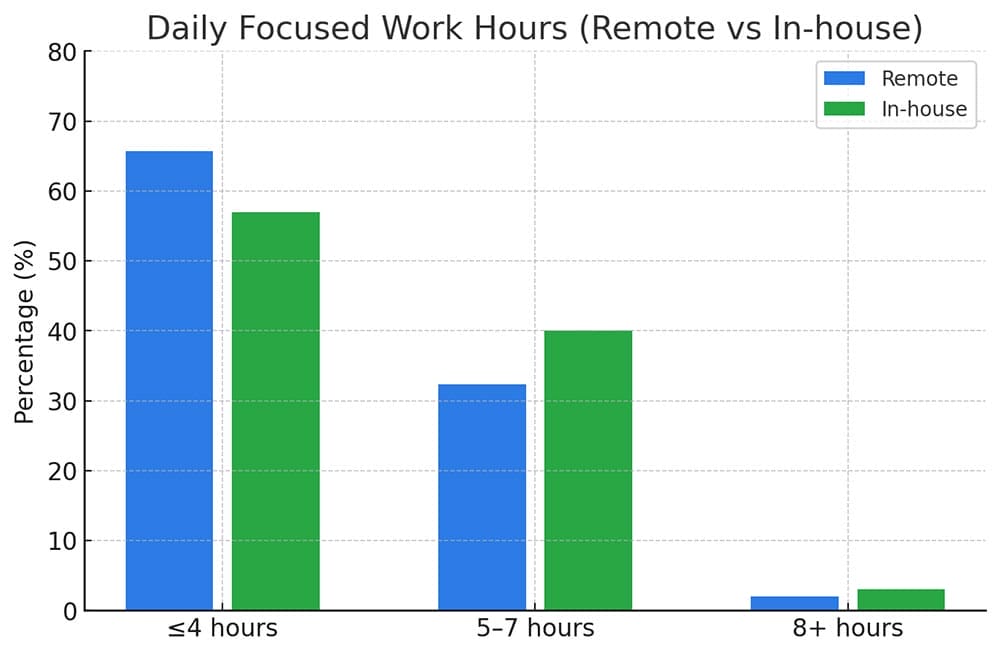
| 4 or less focused hours of work per day | 65.7% | 57.0% |
| 5+ focused hours of work per day | 34.0% | 43.0% |
| Use basic, non-ergonomic seating | 60.4% | 59% |
| Chair value < $300 | 63.4% | 51.0% |
| Chair value > $1000 (Herman Miller, etc) | 10.89% | 4.00% |
| Chair self-paid | 85.2% | 21.0% |
| Standard-issue office chair provided by the company | 9.9% | 72.0% |
Notable statistics (factoring in the ±7% margin of error):
- Remote sitting time (49.5% among remote workers) can be interpreted as meaning the true population value likely falls somewhere between ~42% and ~56% of remote IT workers sitting 8+ hours per day.
- Chronic pain prevalence (69.3% of remote workers and 76% of on-site workers) indicates that the majority experience work-disrupting pain 1–5 days per week — a pattern consistent with chronic strain that is likely to accumulate and worsen over time.
- Walking breaks differ sharply by environment: 34.7% of remote workers take 5+ walking breaks per day, nearly double the rate of on-site workers (18%), suggesting remote roles allow more natural opportunities for movement.
- Use basic, non-ergonomic seating: roughly 60% of both remote and on-site workers rely on basic, non-ergonomic chairs. This indicates that poor seating is a widespread issue across both work environments.
- Chair self-paid (85.2% among remote workers) suggests that, even accounting for the margin of error, a large majority of remote workers (between ~78% and ~92%) are paying for their own chair.
- High-end chair ownership (10.89% among remote workers) translates to ~4% to ~18% in the wider population. Even with this range, remote workers appear more likely than on-site workers to buy premium ergonomic seating.
End-of-Day Energy Levels
We also asked respondents to rate their typical end-of-day energy level on a 5-point scale (1 = exhausted; 5 = energized enough for leisure activities or socializing). The results highlight a clear difference between remote and on-site desk workers:
| Energy Level | Remote (%) | On-site (%) |
| 1-2 score (tired) | 39.6% | 51% |
| 3-5 score (have energy to spare) | 60.4% | 49% |
Key takeaways:
- On-site workers finish the day more depleted: Over half of on-site IT workers report ending their day tired or exhausted, compared with roughly four in ten remote workers.
- Remote work correlates with higher residual energy: A clear majority of remote workers (60.4%) report having at least some energy left at the end of the day, suggesting better recovery capacity outside work hours.
- Energy mirrors movement and autonomy: These results align with earlier findings showing that remote workers take more walking breaks and have greater control over their work environment—factors known to reduce cumulative fatigue.
- Low energy compounds productivity and health issues: End-of-day exhaustion limits recovery, exercise, and social activity, increasing the likelihood that pain and fatigue will carry over into the next workday.
Remote vs On-site Desk Worker Findings
To compare remote and on-site IT workers meaningfully, it is important to factor in the survey’s ±7% margin of error. Any difference larger than seven percentage points between the two groups can be interpreted as a statistically meaningful divergence.

Several measures in our dataset exceed this threshold by substantial margins. These reveal clear behavioral and structural differences in how remote and on-site staff experience the workday:
| Metric (Statistically Meaningful Differences Only) | Remote % | On-Site % |
| Sit 8+ hours/day | 49.5% | 29.0% |
| Walking breaks 5+ times/day | 34.7% | 18.0% |
| No exercise 30+ min per week | 21.8% | 10.0% |
| Chair value < $300 | 63.4% | 51.0% |
| Chair value > $1000 (Herman Miller, etc.) | 10.89% | 4.00% |
| Chair self-paid | 85.2% | 21.0% |
| Standard-issue office chair provided by the company | 9.9% | 72.0% |
Key interpretations
- Remote employees sit longer: nearly half log 8+ hours per day. This suggests greater exposure to prolonged sedentary strain compared with on-site staff.
- Remote workers move more often: they are almost twice as likely to take 5+ walking breaks per day. This suggests more episodic movement patterns, possibly driven by flexible home environments.
- Remote workers report lower exercise frequency: over one in five get no weekly 30-minute exercise sessions. This suggests a higher risk of compounded inactivity outside work hours.
- Remote employees rely more on budget seating: nearly two-thirds use chairs under $300. This suggests reduced ergonomic investment and potential gaps in long-term support.
- Only a small group buys premium chairs: remote workers are over twice as likely to own a $1,000+ ergonomic chair. This suggests only a small minority compensates for lack of employer support through personal spending.
- Remote workers self-fund far more often: 85% pay for their own chair, compared with just 21% of on-site staff. This suggests a major structural burden placed on remote employees for their ergonomic setup.
- On-site workers benefit from employer-provided seating: 72% receive a standard-issue office chair. This suggests a stronger baseline of organizational ergonomic support.
Ergonomic Chair Impact: Limited
How important is ergonomic seating in a worker’s overall wellness routine? Based on our data – and consistent with guidance from esports physical therapy specialists – the answer appears to be: only somewhat.

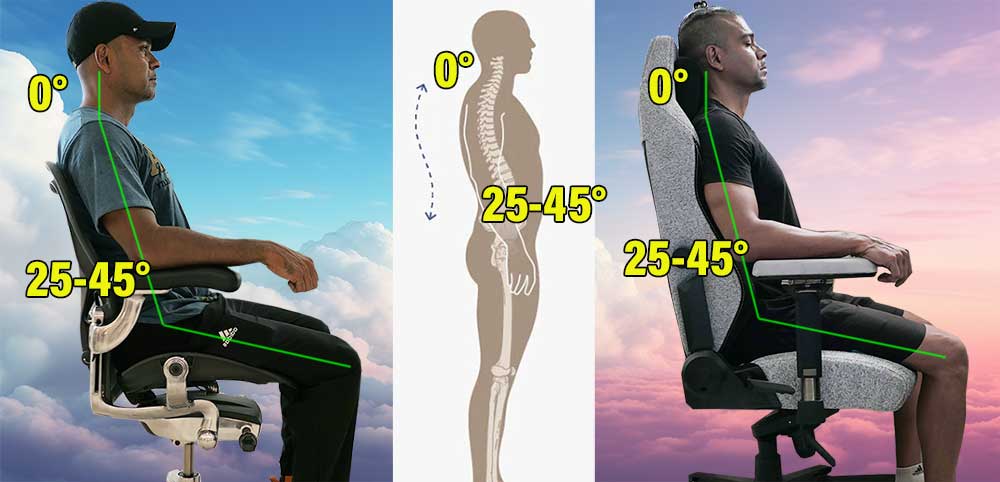
By institutional definition, an “ergonomic” chair includes three adjustable features: lumbar support, armrests, and backrest recline.
The purpose of these features is to help maintain a neutral spinal posture, reducing musculoskeletal strain and preserving energy for cognitive tasks.
However, across all three perspectives in our dataset, ergonomic chair usage shows only marginal influence on whether a worker experiences pain:
- Among our full dataset (100 remote IT workers and 100 working in an office): 60.4% remote and 59% on-site use non-ergonomic seating.
- Among respondents suffering weekly pain: 61.43% remote and 53.95% on-site use non-ergonomic seating.
- Among pain-free respondents: 58.06% remote and 75% on-site use non-ergonomic seating.
Key takeaway: a chair can only support healthy posture — it cannot create it. Workers who sit for long periods without moving, or who lack muscular endurance to maintain alignment, will experience strain regardless of chair type.
Prioritize Healthy Habits Over Ergonomic Seating
Two esports doctors advising ChairsFX reinforce the conclusion that healthy habits have a greater impact than a chair alone.
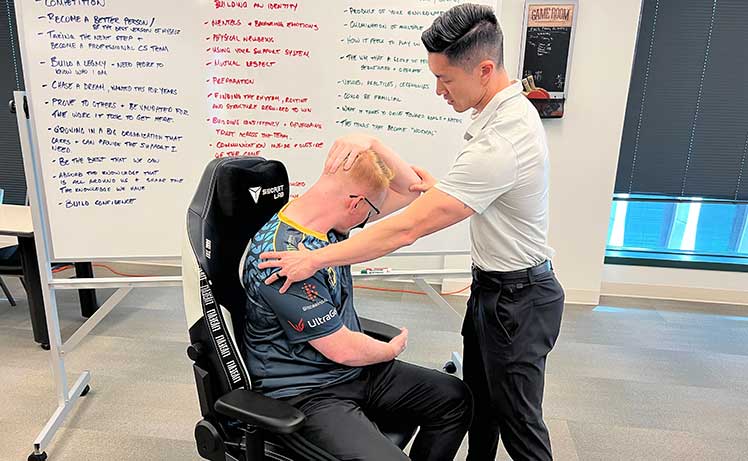
Dr. Jordan Tsai has done wellness consulting for Cloud9, TSM, Evil Geniuses, 100 Thieves, and London Spitfire. His advice:
William Duncan runs Southeast Physical Therapy near Atlanta, Georgia as a Doctor of Physical Therapy. His advice for ChairsFX readers:
Our Data Vs 2025 Desk-Work Realities
Across both remote and on-site environments, our survey data reinforces the three major ergonomic trends shaping desk work in 2025:
- Poor posture drains physical and cognitive energy
- Movement is the most effective intervention for back pain
- Building stronger back and core muscles make good posture easier to maintain
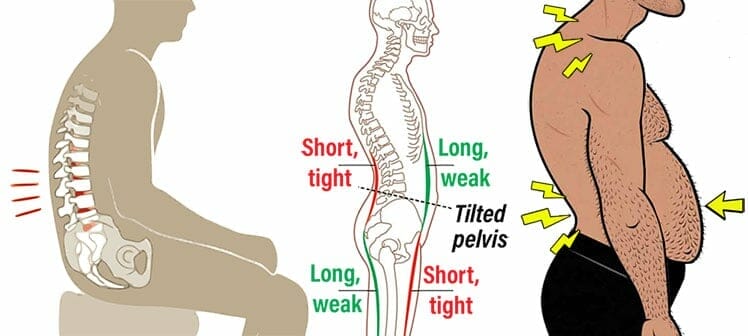
Despite differences in seating quality and break habits, both groups report high rates of weekly pain, limited focused work hours, and near-identical end-of-day fatigue levels.
These patterns mirror the broader scientific consensus: when posture is unsupported, the body must work harder to stay upright. This burns energy that would otherwise support focus, productivity, and overall well-being.
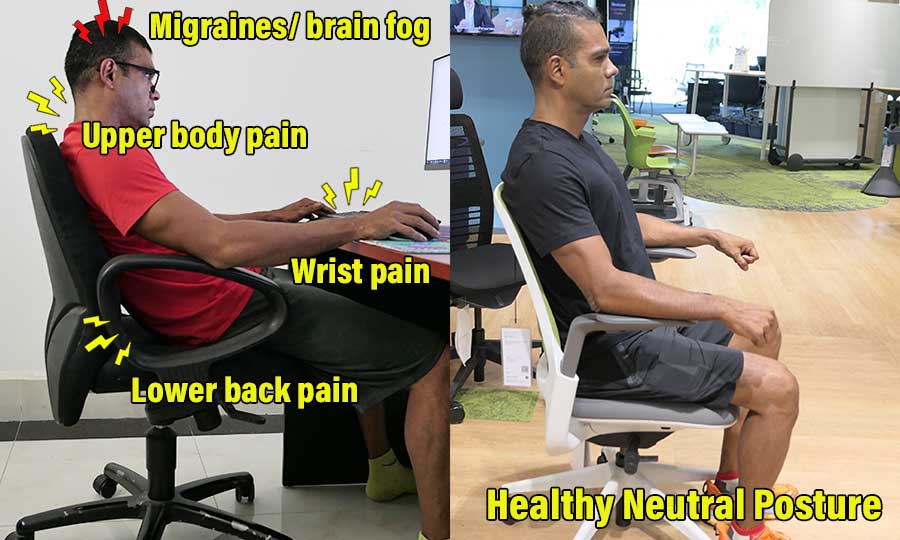
Ergonomic seating helps correct this issue by promoting a neutral spinal posture. Through adjustable lumbar support, armrests, and recline, the chair supports proper alignment (0° neck tilt and a 25–45° lumbar curve), minimizing unnecessary muscle effort throughout the day.
Neutral Posture Biomechanics for Beginners
Musculoskeletal Pain Drains Energy
High weekly pain frequency is the first warning sign of posture-related fatigue. Our data shows that most IT workers experience moderate to severe pain multiple days per week:
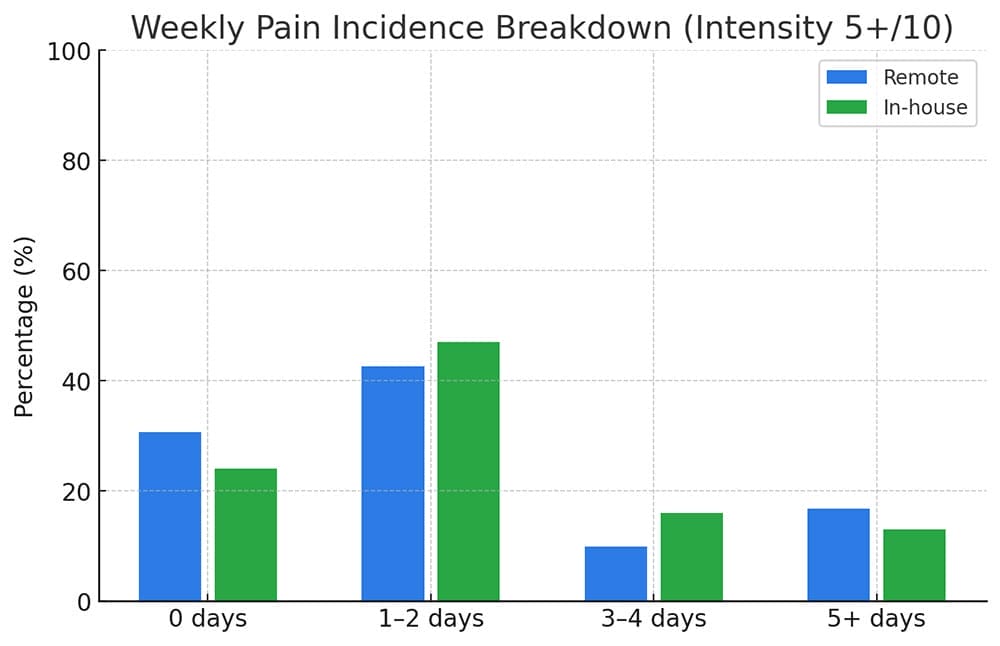
At the extreme levels, 69.3% of remote workers suffer pain with an intensity of 5/10 or worse at least once per week (versus 76% on-site).
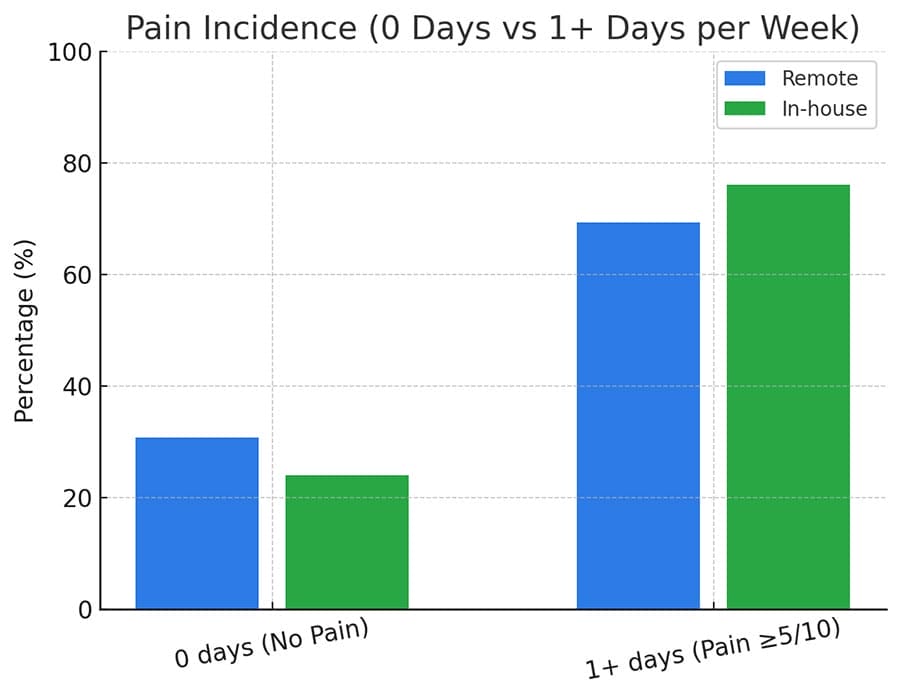
In contrast, only 30.69% of remote workers enjoy pain-free full-time desk work, versus only 24% who work on-site. This shows that full-time pain-free sitting is achievable, but rare overall.
Pain Translates Into Depleted Energy
Workers who report more frequent pain also tend to report lower end-of-day energy. When asked to rate their energy from 1 (exhausted) to 5 (highly energized), most respondents landed in the middle, with the largest share selecting 2 (tired) or 3 (mildly energized):
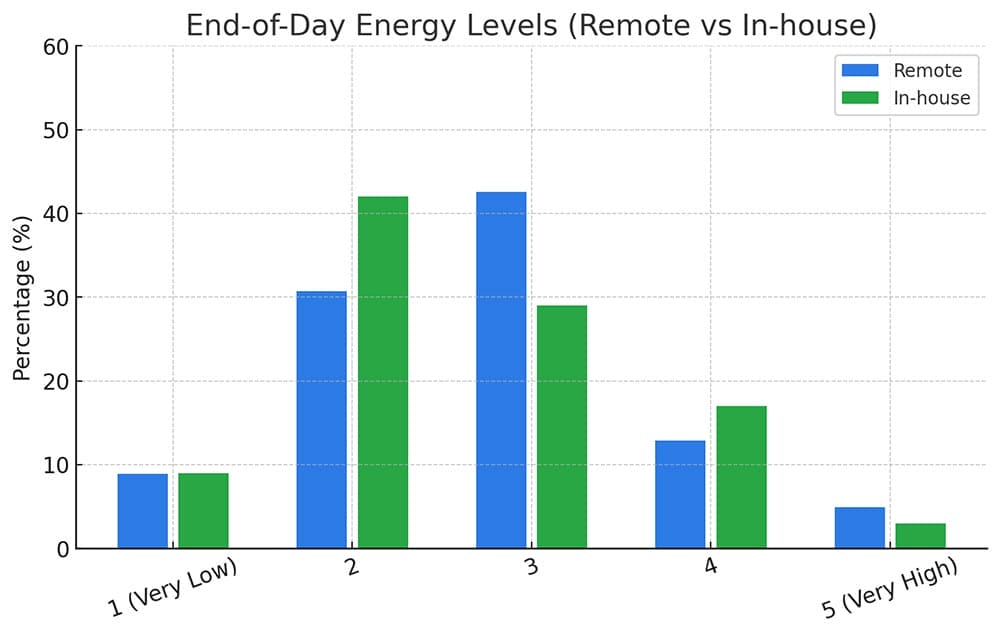
This reinforces the idea that prolonged sitting with a misaligned spine contributes to reduced energy. When posture is off-center, supporting muscles must work harder to keep the torso upright.
That extra strain gradually drains both physical and cognitive reserves. The gist:
- A large share of the body’s energy is spent holding itself upright against gravity.
- When posture is misaligned, supporting muscles work harder, accelerating fatigue.
- When posture is neutral and aligned, muscles work efficiently. This frees more energy for cognitive performance.
Reduced Energy Depletes Focus
Among the full data set of 200 respondents, 65.66% of remote and 57% of on-site workers report four or less hours of productivity each day:
Among respondents suffering debilitating pain 1-5 times per week, the productivity numbers are similar:
| Focused Hours Per Day | Remote Pain (%) | On-site Pain (%) |
| ≤ 4 hours/day | 68.57% | 56.58% |
| 5+ hours/day | 31.43% | 43.42% |
This illustrates how musculoskeletal strain reduces the cognitive resources required for sustained, high-quality work.
According to the WHO, lower back pain is the leading cause of disability in 160 countries. Other common musculoskeletal disorders suffered by desk workers include:
- Wrist disorders: 4 million Americans suffer from carpal tunnel syndrome.
- Neck pain: the fourth-leading cause of disability in America.
- Shoulder pain: Americans average 4.5 million doctor visits and $3 billion in associated health costs.
- Elbow and forearm pain: 1-3% of all Americans suffer from elbow tendonitis, aka tennis elbow.
Habit Patterns Linked to Pain
Across all respondents, 70% of remote workers and 76% of on-site workers experience at least one day of work-disrupting pain per week. To understand what might be driving these symptoms, we analyzed this group separately and compared their work habits.
Long Sitting Periods
Within the pain group, remote workers are far more likely to have long uninterrupted sitting times. More than half (51.43%) sit for 8+ hours per day, compared with 31.58% of on-site (aka in-house) workers.
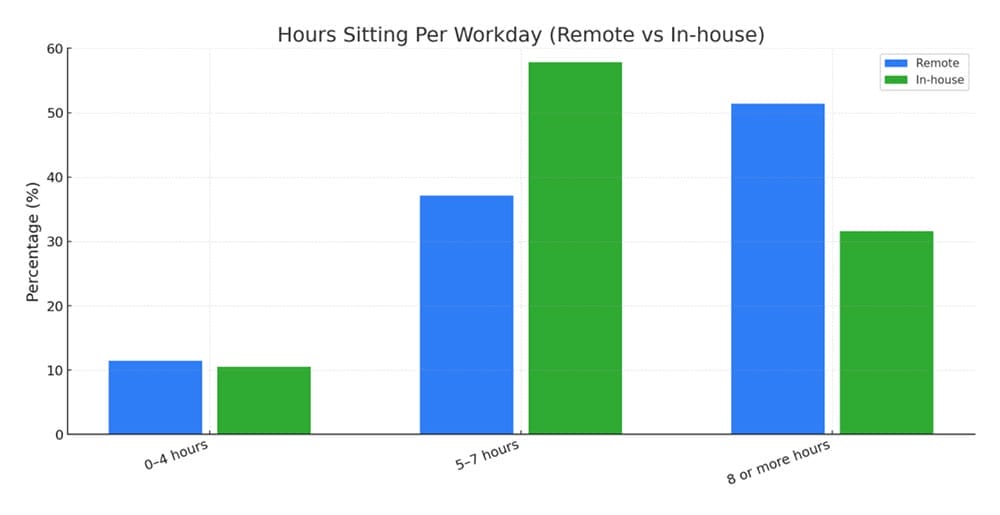
This suggests that extended sitting time may be a major factor that causes pain — especially among remote workers with fewer natural interruptions in their day.
Not Enough Walking Breaks
In spite of long sitting times, a large share of pain sufferers take very few walking breaks:
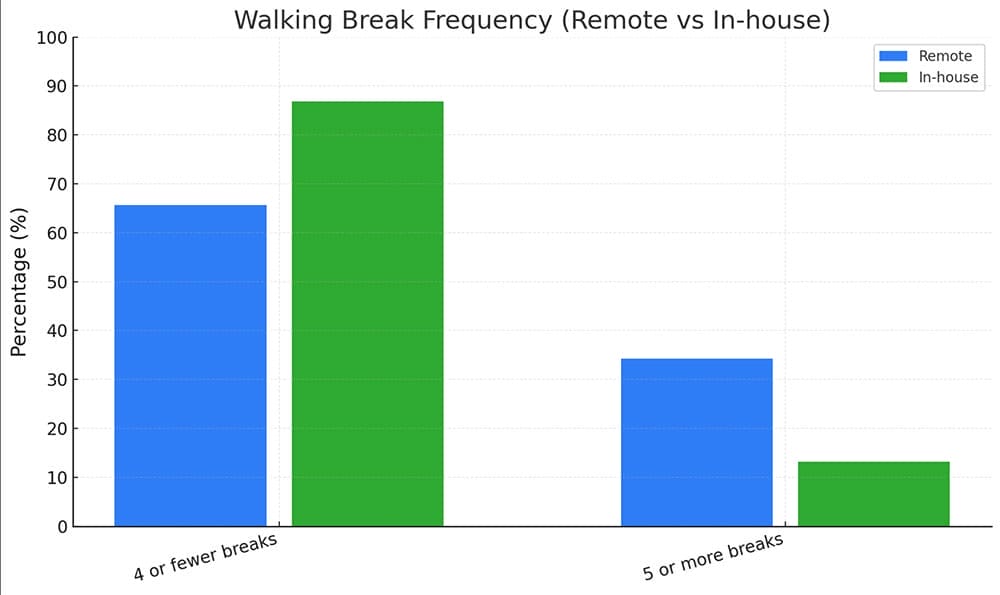
This combination (high sitting time and low break frequency) creates conditions strongly associated with musculoskeletal pain.
- 65.71% of remote workers take 4 or fewer breaks per day.
- An even larger 86.85% of on-site workers take 4 or fewer breaks per day.
Not Enough Exercise
Across the full dataset, remote workers are twice as likely as on-site workers to get no weekly exercise. However, the majority of both groups still achieve 3–5+ days of moderate to vigorous activity per week.
In our survey definitions, moderate activity (e.g., jogging) elevates heart rate, while vigorous activity (e.g., sprinting or boxing) produces heavy breathing and sweating.
Per CDC guidelines, adults should aim for 150 minutes of moderate or 75 minutes of vigorous activity per week, plus 2 days of strength training.
Under our survey’s 30-minute-per-session definition, respondents would need at least 5 days of moderate exercise per week, or 3 days of vigorous exercise.
Baseline Exercise Vs Two Cohorts
The tables below compare baseline exercise patterns for all remote and on-site workers with two sub-groups: those experiencing 1–5 days of weekly pain (5/10 intensity) and those reporting no weekly pain. Remote worker exercise statistics:
| Exercise | Baseline (%) | Pain-Free Remote (%) | Pain Sufferers Remote (%) |
| 0 days | 21.78% | 3.96% | 21.43% |
| 1-2 days | 24.75% | 21.78% | 30% |
| 3-5+ days | 53.46% | 74.25% | 48.57% |
On-site worker exercise statistics:
| Exercise | Baseline (%) | Pain-Free On-Site (%) | Pain Sufferers On-Site (%) |
| 0 days | 10% | 8.7% | 7.89% |
| 1-2 days | 39% | 39.13% | 39.47% |
| 3-5+ days | 51% | 52.17% | 52.63% |
Summary of findings:
- Remote pain sufferers are five times more likely to get zero weekly exercise compared with pain-free remote workers.
- Pain-free workers—both remote and on-site—show higher representation in the 3–5+ days/week exercise category.
- Across all groups, higher exercise frequency aligns with lower rates of weekly pain.
- Low exercise is a strong predictor of recurring musculoskeletal discomfort, particularly among remote staff.
Desk Work Productivity Best Practices
Our core survey findings point to a clear theme: productivity, comfort, and long-term well-being are shaped by consistent daily habits.
To translate these insights into practical guidance, we examine two high-performing groups: pain-free IT workers and professional esports athletes. Their routines reveal the behaviors most strongly associated with sustained energy, focus, and reduced musculoskeletal strain.
Pain-Free Desk Worker Sub-study
This article outlines the core challenges faced by IT desk workers in the United States—long sitting hours, limited movement, low exercise frequency, and widespread musculoskeletal strain.
The solutions are largely implied by the problems themselves: to counteract inactivity, workers must move more; to reduce strain, they must improve posture, strengthen key muscle groups, and make more intentional ergonomic choices.
To reinforce these solutions, we conducted a follow-up analysis focusing exclusively on the minority of workers who report pain-free full-time desk work. Their routines reveal a clear pattern: shorter sitting sessions, more frequent movement, stronger exercise habits, and higher-quality ergonomic setups. Highlight data trends:
- Higher exercise frequency among pain-free workers across both environments.
- More consistent use of frequent walking breaks, especially among remote workers.
- Shorter sitting durations and fewer long, uninterrupted work blocks.
These behaviors form a practical roadmap for reducing strain and maintaining higher end-of-day energy. Full breakdown of habits used by pain-free workers:
Esports Performance Pillars
Our survey shows that 65.7% of remote workers and 57% of in-house (aka on-site) workers achieve only four or fewer hours of high-quality productivity per eight-hour shift.
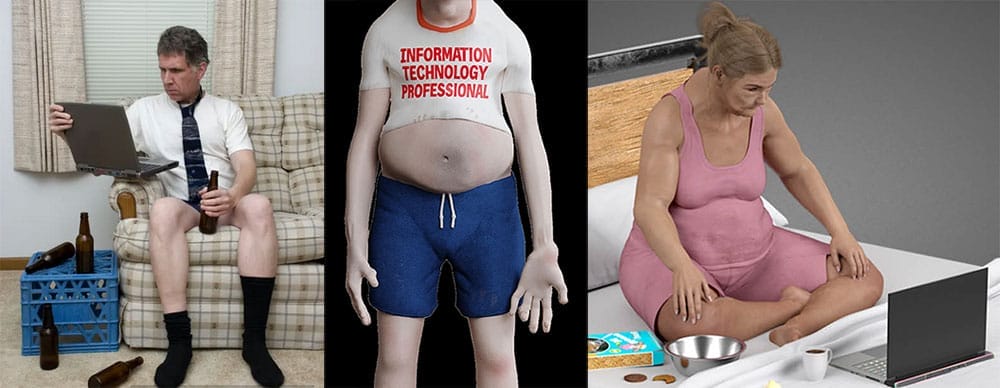
While corporations often tolerate this inefficiency, professional esports athletes cannot — their careers depend on sustained peak cognitive and motor performance.

At the highest level, esports players must maintain elite speed, precision, reaction time, and hand-eye coordination, with some titles demanding up to 400 actions per minute.
Under these conditions, musculoskeletal strain or mental fatigue isn’t just uncomfortable — it’s a direct threat to competitive viability.

To protect performance, top esports organizations rely on four core pillars:
- Nutrition: Stable blood sugar supports consistent energy, sharper focus, and reduced mental “crashes.” Players follow structured meal timing and balanced macronutrient intake to keep cognitive performance stable throughout practice blocks.
- Recovery: Adequate rest is essential for decision-making and stress management. When chronically fatigued, the body increases cortisol, which suppresses DHEA and impairs memory, mood, and mental stamina.
Esports coaches emphasize 8 hours of sleep and frequent micro-breaks during desk work to maintain clarity and reduce cumulative strain. - Physical Health: Strength and mobility work — especially core and postural conditioning — help players maintain neutral sitting posture for long sessions. A stronger body slows fatigue, improves precision, and reduces the risk of overuse injuries.
- Psychological Balance: Most elite esports players are 17–26 years old, with an average career span of just 2–4 years. To prevent burnout, teams promote structured downtime: walking outdoors, hobbies, time with family, or anything that mentally “resets” the player between intense training blocks.
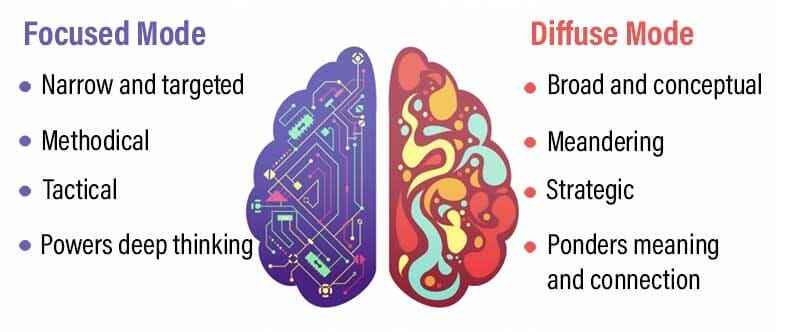
Regarding psychological balance, Team Liquid’s Resilience Meta highlights the importance of alternating focus with deliberate periods of diffuse, restorative thinking. CLG coach Bobby emphasizes the need to oscillate between these modes:
He also stresses the importance of consistent sleep:
Click below for a full rundown (with sources) of the esports pillars:
Esports Pillars for Desk Workers
The preceding pillars apply far beyond esports. For example, Magnus Carlsen, despite being world #1, saw his performance stagnate around 2017. Competition was tightening, matches were becoming more demanding, and he felt his edge slipping.

To rebuild peak form, he adopted a similar four-pillar approach: reducing alcohol, improving diet, increasing physical training, prioritizing recovery, and incorporating intentional mental breaks.
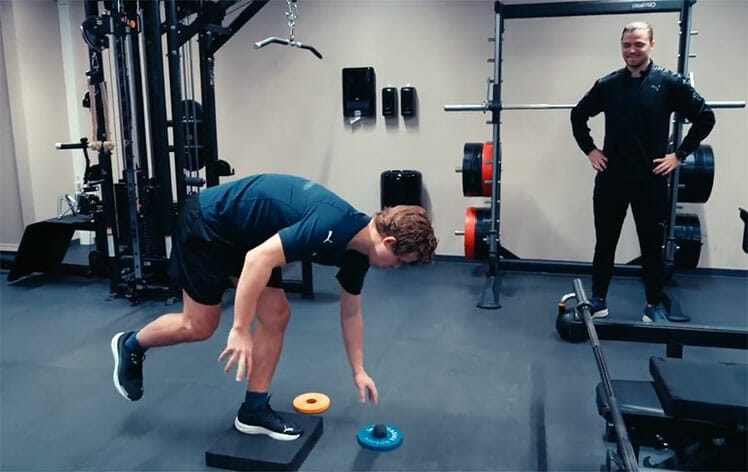
These adjustments strengthened his stamina and clarity — and he went on to dominate the chess world in the years that followed.
Concluding Study Takeaways
Across 200 verified U.S. IT workers, clear patterns emerged in how remote and on-site employees sit, move, focus, and manage discomfort.
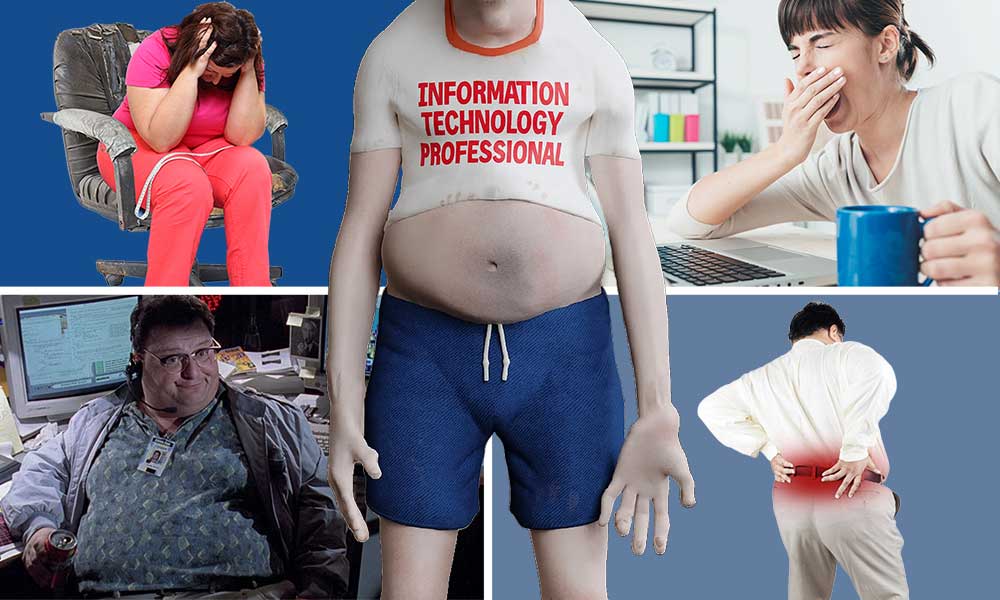
Remote staff tend to sit longer and invest less in ergonomics, while on-site workers benefit more from employer-provided setups but still report equally high levels of pain and fatigue.
Together, the findings highlight widespread musculoskeletal strain across both environments—and the behaviors most strongly associated with it.
Notable statistics from the study include:
- 49.5% of remote workers sit 8+ hours per day, compared with 29% of on-site workers.
- 69.3% of remote and 76% of on-site workers experience pain (5/10 or higher) at least once per week.
- 85.2% of remote workers personally pay for their work chair, versus 72% of on-site workers who receive an employer-provided model.
- 34.7% of remote workers take 5+ walking breaks per day, nearly double the rate of on-site staff (18%).
- Over 20% of remote workers get zero weekly exercise—more than double the on-site rate (10%).
