

This sub-study expands on a vetted survey of 200 U.S.-based full-time IT workers (100 remote and 100 on-site), examining their health, productivity, and desk work habits. The full dataset showed how poor work habits contribute to musculoskeletal pain, reduced focus, and end-of-day burnout. This analysis isolates the 32% of remote workers and 26% of on-site staff who report pain-free deskwork. By studying this group, we find posture, movement, and work behaviors that impact wellness and productivity.

All findings come from the same verified dataset as the primary study. Respondents were authenticated through CloudConnect’s Sentry Protocol.
The final sample of 200 respondents reflects a broad cross-section of full-time IT roles, including system administrators, software developers, IT support, network operators, cybersecurity staff, and data analysts.
Analysis of Pain-Free IT Desk Workers
From the full dataset, we isolated the subgroup of workers who reported zero days of pain per week — 32% of remote and 26% of on-site employees. We compared their habits across sitting time, break frequency, exercise behavior, and chair type.
Statistical validity: Given the original survey’s estimated ±7% margin of error, these findings should be viewed as directional patterns rather than exact population values.
Pain-Free Desk Worker Habits
Across the full dataset, pain was the norm rather than the exception: 69.3% of remote workers and 76% of on-site workers reported experiencing pain rated 5/10 or higher at least once per week.
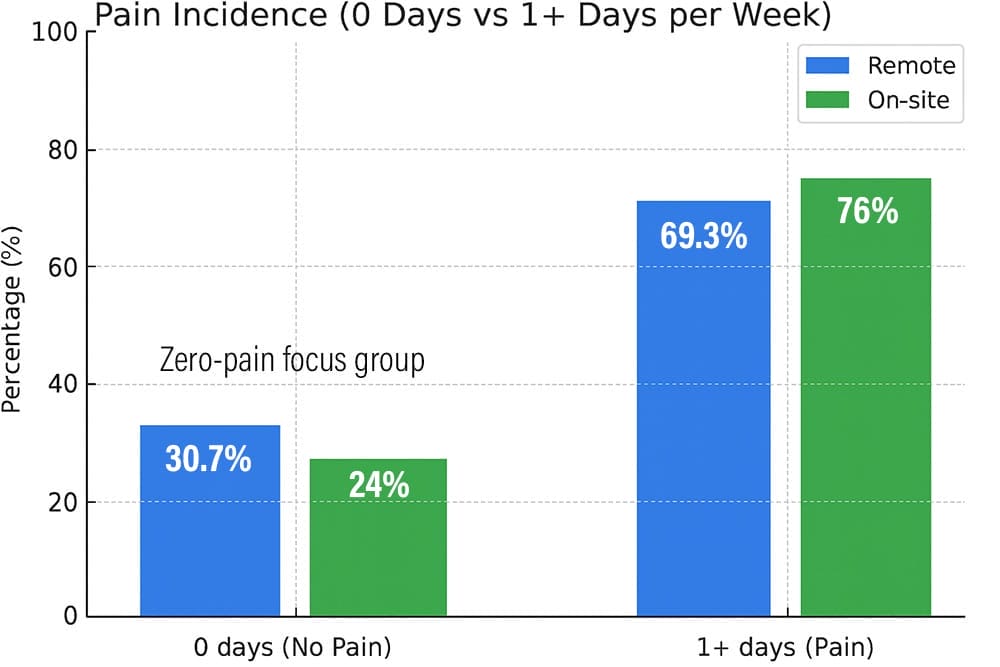
Pain 5/10+ is severe enough to hinder working ability and focus. When we analyzed this subset of pain sufferers, three patterns emerged:
- Long daily sitting hours: Remote pain sufferers in particular show a high likelihood of sitting 8+ hours, increasing postural load and muscle fatigue.
- Few movement breaks: Both groups (especially on-site workers) rarely interrupt their sitting time, which compounds stiffness and discomfort.
- Not enough exercise: Remote pain sufferers are five times more likely to get zero weekly exercise compared with pain-free remote workers.
In contrast, the smaller subset of pain-free desk workers reports higher exercise frequency, more movement breaks, more hours of productivity, and higher energy levels at the end of their shift. However, their use of ergonomic chairs is not significantly different.
Exercise Frequency
Among remote workers, low exercise frequency corresponds with more frequent pain. Among on-site IT professionals (programmers, technicians, data analysts, etc), those who exercise more often are statistically more likely to enjoy pain-free desk work.
Remote Worker Exercise Frequency
Remote workers who suffer 1 or more days of pain per week (with intensity of 5/10, enough to distract from work) are five times more likely to get 0 days of exercise, compared to those who are pain-free.
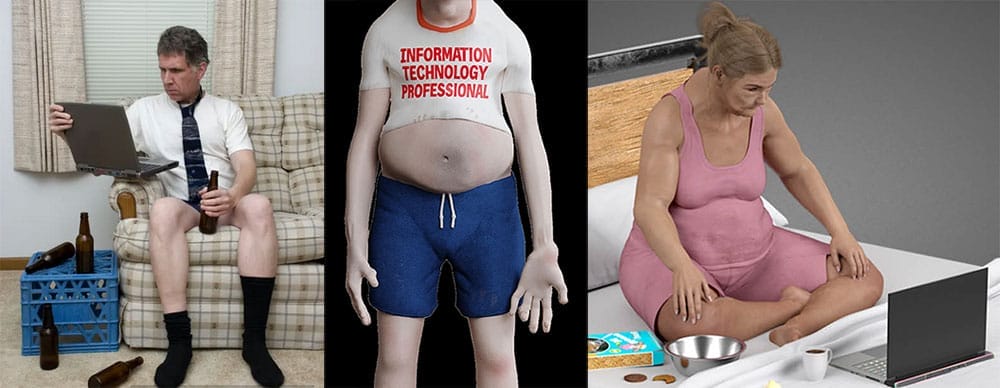
Also notable: pain-free remote IT workers are much more represented in the 5+ days exercise category (34.65% vs. 11.43%):
| Exercise | Pain-Free (%) | Pain Sufferers (%) |
| 0 days | 3.96% | 21.43% |
| 1-2 days | 21.78% | 30.00% |
| 3-4 days | 39.60% | 37.14% |
| 5+ days | 34.65% | 11.43% |
Key takeaway: Higher exercise frequency strongly aligns with being pain-free in remote workers.
On-site Exercise Frequency
On-site workers show smaller differences between pain-free and pain sufferers than remote workers. The standout change is in the 5+ days group.

Among those who exercise five or more times per week, pain-free on-site workers have significantly higher representation (21.74% vs. 13.16%):
| Exercise | Pain-Free (%) | Pain Sufferers (%) |
| 0 days | 8.7% | 7.89% |
| 1-2 days | 39.13% | 39.47% |
| 3-4 days | 30.43% | 39.47% |
| 5+ days | 21.74% | 13.16% |
Frequency of Breaks
Among remote workers, pain-free workers are more likely to take very frequent breaks, while those experiencing weekly pain tend to take fewer or less varied breaks throughout the day.

Among on-site workers, the pattern flips: pain sufferers cluster heavily in mid-range break frequency (3–4× per day), whereas pain-free workers are more evenly distributed, with a stronger presence in the frequent break (5+×) category.
Remote Worker Break Frequency
Pain-free remote workers take more frequent breaks overall (40.59% take breaks often (5+ times/day), compared to 34.29% of pain sufferers:
| Break Frequency | Pain-Free (%) | Pain Sufferers (%) |
| Never | 5.94% | 7.14% |
| Rarely (1-2x) | 23.76% | 23.76% |
| Sometimes (3–4×) | 29.70% | 22.86% |
| Often (5+×) | 40.59% | 34.29% |
Key takeaway: Remote workers who remain pain-free are more likely to break up sitting time with frequent, restorative micro-breaks, while those with weekly pain lean toward low-break patterns.
On-site Worker Break Frequency
Pain sufferers overwhelmingly concentrate in the “Sometimes (3–4×)” category (51.32% vs 21.74%)—a strong mid-range pattern. In contrast, pain-free workers are more represented in the frequent break (5+×) category (26.09% vs 13.16%).
| Break Frequency | Pain-Free (%) | Pain Sufferers (%) |
| Never | 17.39% | 1.32% |
| Rarely (1-2x) | 34.78% | 34.21% |
| Sometimes (3–4×) | 21.74% | 51.32% |
| Often (5+×) | 26.09% | 13.16% |
Key takeaway: On-site pain sufferers tend to fall into a moderate-movement pattern, while pain-free workers are more likely to take high-frequency breaks that better interrupt prolonged sitting.
Ergonomic vs Non-Ergonomic Seating
Chair quality differs more by workplace than pain status. Remote workers use non-ergonomic chairs at similar rates, while on-site workers show a sharp divide.
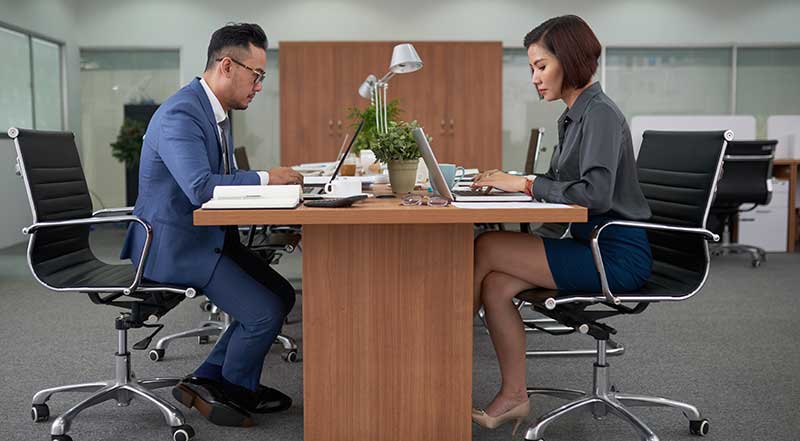
Pain-free staff mostly use non-ergonomic seating, whereas pain sufferers are more likely to use ergonomic chairs.
| Chair Type | Remote Pain-Free (%) | Remote Pain (%) | On-site Pain-Free (%) | On-site Pain |
| Ergonomic | 41.94% | 38.57% | 25.00% | 46.05% |
| Non-ergonomic | 58.06% | 61.43% | 75.00% | 53.95% |
Key takeaway: Ergonomic seating alone does not prevent pain. Chair choice appears influenced more by workplace conditions than by whether someone already experiences discomfort.
Focused Hours Per Workday
Remote workers with weekly pain are more likely to report shorter periods of deep focus, while pain-free remote workers show a modest shift toward longer “in the zone” stretches.
Remote focused Hours Per Day
Pain-free remote workers are more likely to sustain 5–7 hours of focused work, whereas those with pain are more concentrated in the 4-hours-or-less range:
| Remote Focused Hours | Pain-Free (%) | Pain (%) |
| 4 hours or less | 54.84% | 68.57% |
| 5–7 hours | 41.94% | 27.14% |
| 8+ hours | 3.23% | 1.43% |
On-site Focused Hours Per Day
For on-site workers, pain status doesn’t clearly separate who can stay focused longer—both groups cluster in the same 4-hours-or-less and 5–7-hour bands, with only a slight edge toward 8+ hours among pain sufferers.
| On-site Focused Hours | Pain-Free (%) | Pain (%) |
| 4 hours or less | 58.33% | 56.58% |
| 5–7 hours | 41.67% | 39.47% |
| 8+ hours | 0% | 3.95% |
Energy Levels at the End of the Day
Our final benchmark of desk worker health is end-of-day energy, rated on a 5-point scale (1 = exhausted, 5 = highly energized).
When workers sit for long periods with musculoskeletal strain, muscles work harder to stabilize posture, burning more energy throughout the day.
This pattern appears clearly in the results: pain-free cohorts consistently report higher end-of-day energy, while workers experiencing weekly pain are far more likely to end the day drained.
| Energy Level | Remote Pain-Free (%) | On-site Pain-Free (%) | Remote Pain (%) | On-site Pain (%) |
| 1–2 (Low Energy) | 25.81% | 29.17% | 45.71% | 57.89% |
| 3–5 (Moderate–High Energy) | 74.19% | 70.83% | 54.29% | 42.11% |
Key takeaways:
- Pain-free workers are far more likely to finish the day with moderate-to-high energy.
- Pain sufferers are far more likely to end the day with low energy.
- Habit patterns linked to pain (long sitting, limited breaks, low exercise) appear to directly impact daily energy reserves.
Conclusion: Healthy Habits Boost Productivity
Across both remote and on-site environments, pain-free desk workers consistently demonstrated healthier daily habits—shorter sitting times, more movement, better exercise frequency, and stronger end-of-day energy.
These patterns showed clear behavioral differences between workers who suffer weekly pain and those who remain pain-free.
Notable findings from our study include:
- Pain-free workers take far more daily movement breaks (up to 40% higher in remote groups).
- Remote pain sufferers are five times more likely to get zero days of weekly exercise.
- On-site pain-free workers overwhelmingly rely on non-ergonomic chairs (75%), yet still avoid pain through better habits.
- Pain-free workers are far more likely to end the day with moderate-to-high energy (70–74% vs. 42–54% among pain groups).
- Pain sufferers sit longer, move less, and report significantly lower focus and resilience throughout the day.
These findings align with advice from Doctor of Physical Therapy William Duncan, who reminds ChairsFX readers:
Final takeaway: These results reinforce a core ChairsFX principle: a chair alone will not solve wellness or productivity challenges. The best outcomes come from pairing good seating with healthy habits (movement, posture changes, and active self-care) to create a workday that feels both comfortable and productive.
Full Desk Worker Survey: Remote vs. On-Site Findings
The complete study includes a detailed analysis of 200 full-time USA-based IT desk workers.
