

Excessive texting with a bent neck can distort your posture and cause serious musculoskeletal strain. I fixed my text neck in two weeks using brute willpower, a gaming chair headrest, and constant self-monitoring. Every time my neck drifted forward, I had to catch myself and correct it.
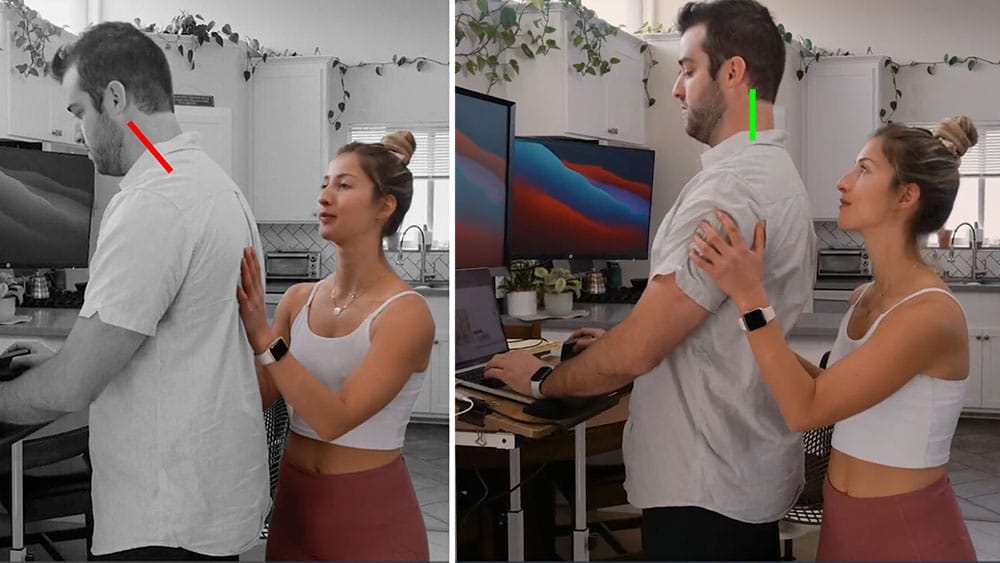
The Upright GO 2 would have made that journey effortless. Instead of relying on willpower and constant vigilance, the device handles the monitoring automatically.
First, calibrate the motion sensor to recognize your upright neck posture. Then, attach it to the base of your neck.
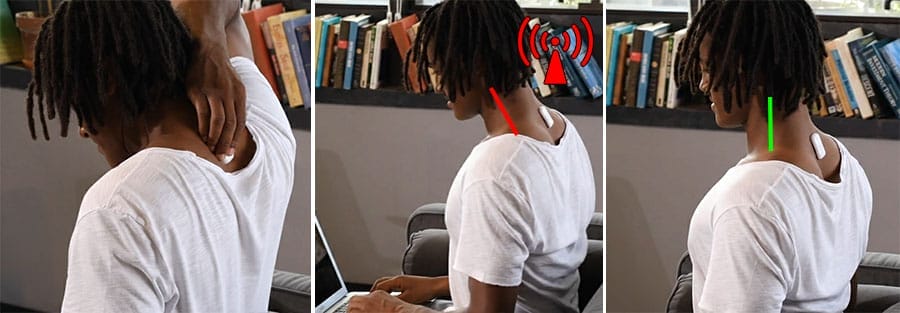
It vibrates the instant you slouch, allowing you to focus on your work while logging your progress in a Bluetooth-connected app.
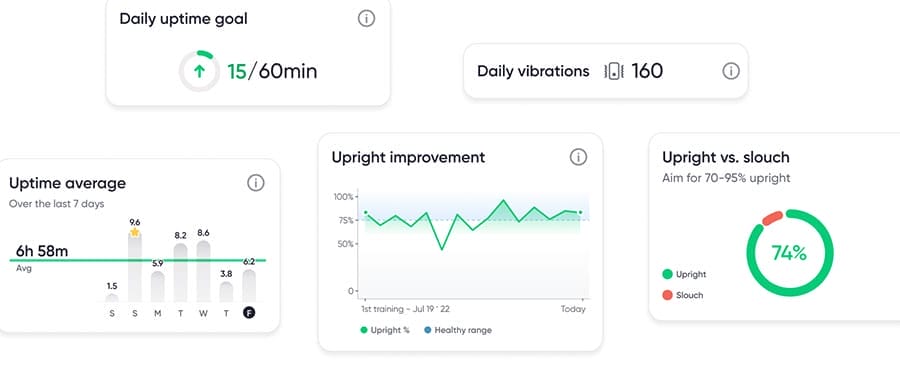
Over time, these corrections become automatic as your muscle memory adapts.
Upright Go 2 Bundle (with Necklace) on Amazon
The Standard model ($89 with 10 adhesive strips) is also available on Amazon.
What’s in the Box
The standard package includes the sensor device, a compact carrying case, USB-C charging cable, and 10 adhesive strips. Each adhesive can be reused 2–3 times before replacement.
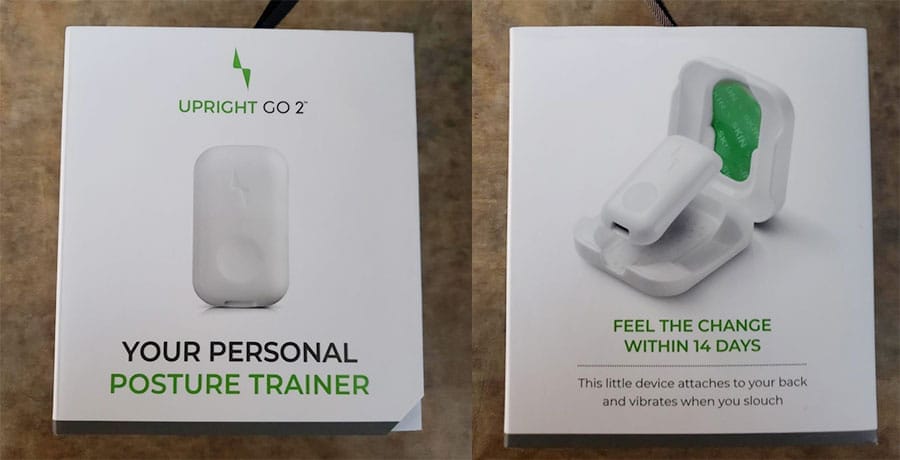
The Premium edition ($10 more) adds a necklace accessory, eliminating the need for adhesives entirely.
This makes the device practical for all-day use—whether you’re at your desk, standing, walking, or moving around town.
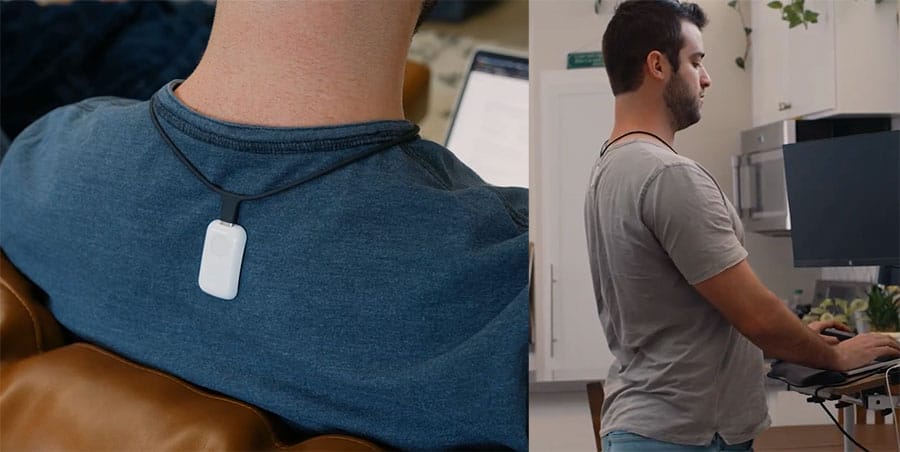
According to the manufacturer, most users notice significant improvement within two weeks (the same timeframe it took me using manual methods). Given that, the Premium necklace edition seems the smarter choice.
Upright Go 2 Bundle (with Necklace) on Amazon
The Standard model ($89 with 10 adhesive strips) is also available on Amazon.
Upright GO 2 Posture Corrector Review
The body adapts to the positions it holds most often(1). This adaptation happens so gradually that it often goes unnoticed.
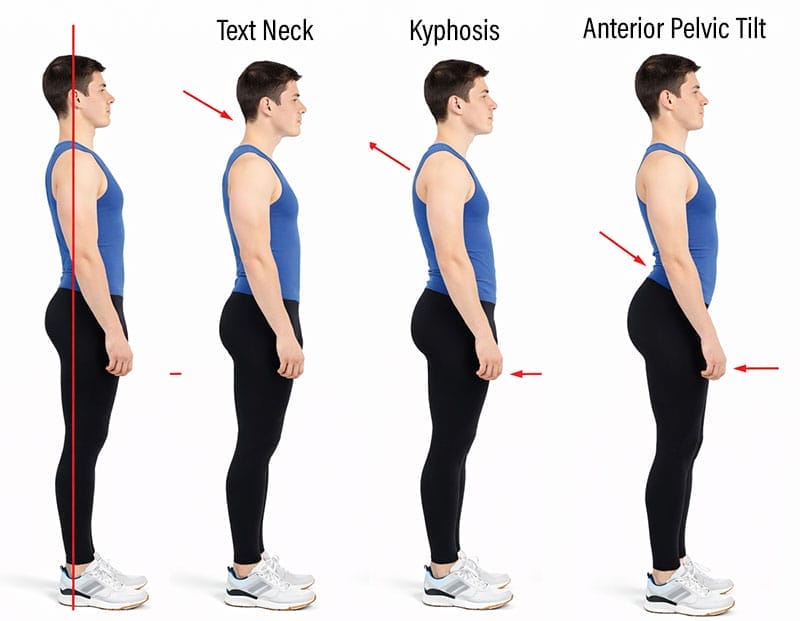
For example, a 2025 systematic review and meta-analysis found the pooled prevalence of text neck syndrome (neck, lower back, and shoulder strain, often in combination) among university students was 60.8%(2).
Because the shift from healthy posture to text neck is so subtle, many people—like myself—remain unaware of their problem until they see side-profile pictures of their relaxed posture.
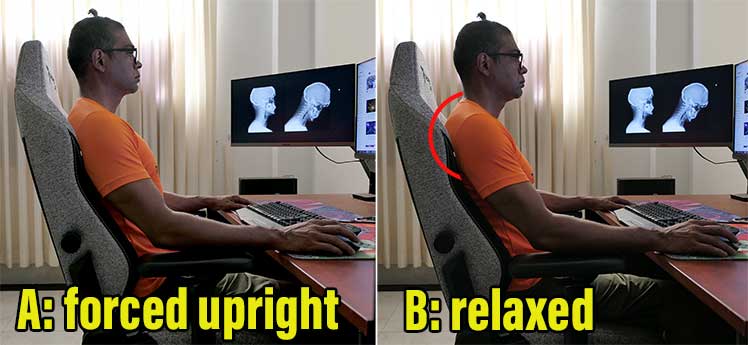
The Upright GO 2 provides a foolproof solution: instant vibration feedback the moment you slouch, eliminating the guesswork entirely.
What Is the Upright GO 2?
The Upright GO 2 is a smart motion sensor package consisting of two components:
- The device: A lightweight sensor (about the size of a USB stick) that attaches to your upper back
- The mobile app: iOS/Android software that controls sensitivity, tracking, and training programs
The device functions as a smart motion sensor. When calibrated to your neutral posture, it continuously monitors your back angle.
The moment you lean forward beyond your set threshold, it vibrates—alerting you to correct your position.
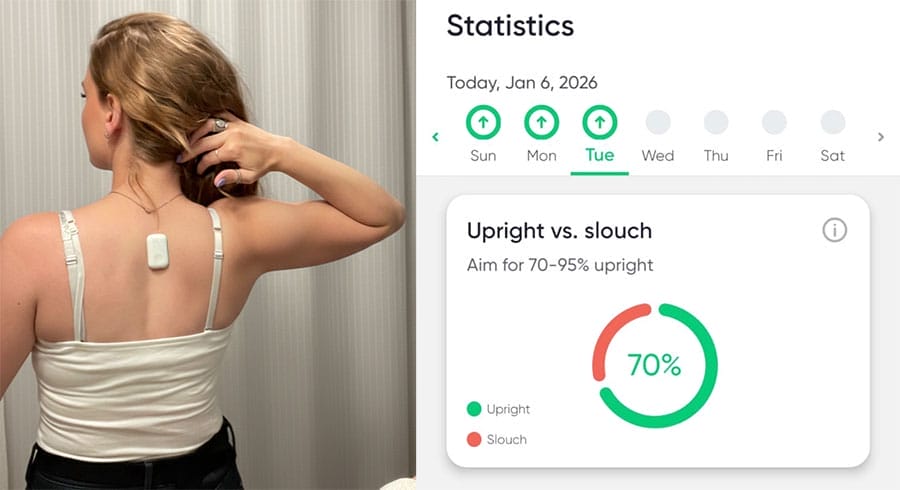
This creates a feedback loop similar to what I did manually with my gaming chair headrest, except the Upright GO 2 works everywhere: at your desk, standing, walking, or anywhere you need posture awareness.
Two Operating Modes:
- Training Mode: Vibrates when you slouch, actively retraining muscle memory throughout the day
- Tracking Mode: Monitors your posture silently without vibration, collecting data on how often you maintain proper alignment
Using Upright GO 2 With an Ergonomic Chair
The Upright GO 2 works alongside the same neutral posture principles outlined in my text neck rehabilitation article:
Step 1: Calibrate to neutral posture
Sit in your ergonomic chair with proper alignment—feet flat, lumbar support engaged, spine upright at ~100° recline. Make a conscious effort to hold your neck cleanly upright over your shoulders.
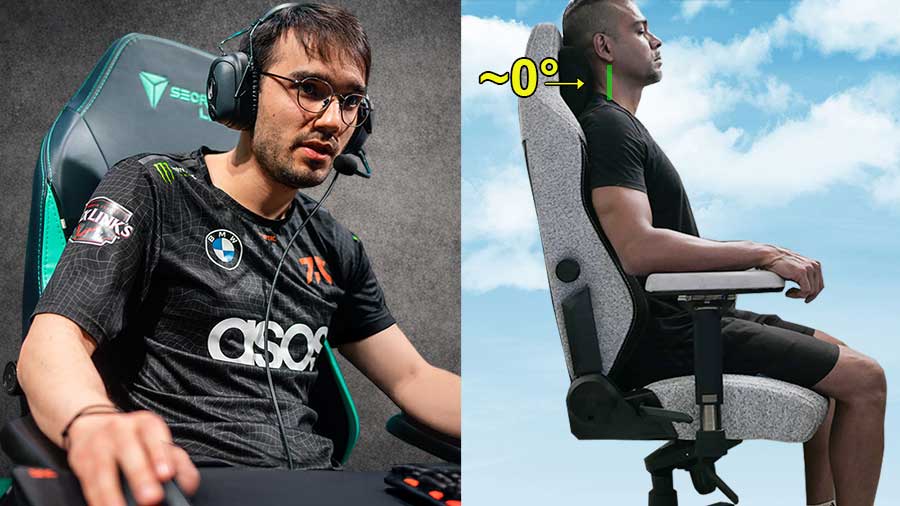
Open the Upright GO 2 app and calibrate the device to this position. The device will now treat this as your baseline.
Step 2: Let the device train you
Throughout your workday, the device will vibrate whenever you drift from neutral. That’s your cue to re-engage your core muscles to straighten your spine and hold your neck upright.
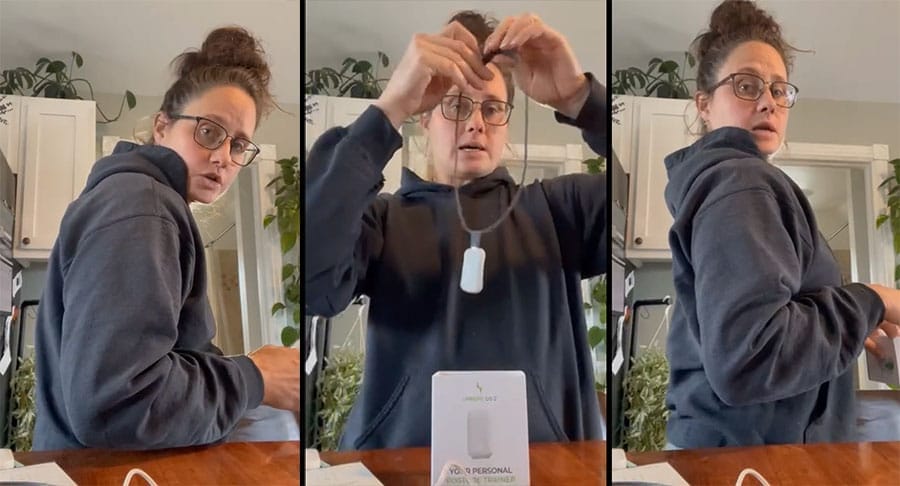
Based on my own experience, the first week might feel strenuous and disorienting. Beyond that initial wall, pain recedes, comfort sets in, and maintaining proper posture starts to become automatic.
Step 3: Stay dynamic, not rigid
Don’t confuse “upright posture” with “frozen posture.” Continue to shift positions, lean back occasionally, and take movement breaks. The key is keeping your head balanced over your shoulders when seated—not locking yourself into a single position(3).
What to Expect
During the first few days, you may experience mild muscle soreness—similar to starting a new workout routine. This is normal. Your postural muscles are activating properly for the first time in potentially years. The discomfort typically subsides within 3–5 days as muscles adapt.
Conclusion: Easier Text Neck Recovery
I’ve already proven that text neck rehabilitation is possible in approximately two weeks using nothing but discipline and ergonomic furniture. The Upright GO 2’s makers claim a similar timeline—without the mental exhaustion of constant self-monitoring.
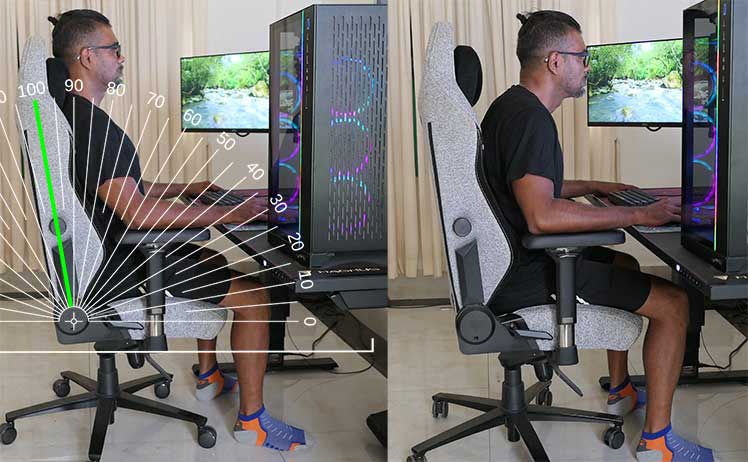
The difference is effort. My method required relentless awareness: catching every forward lean, forcing myself upright hundreds of times per day, using a headrest as tactile feedback. It worked—but it was cognitively draining.
The Upright GO 2 automates that process. It handles the monitoring. You handle the correction. After two weeks, muscle memory takes over and proper posture becomes effortless—whether you’re sitting in an ergonomic chair, standing at a desk, or walking around your home.
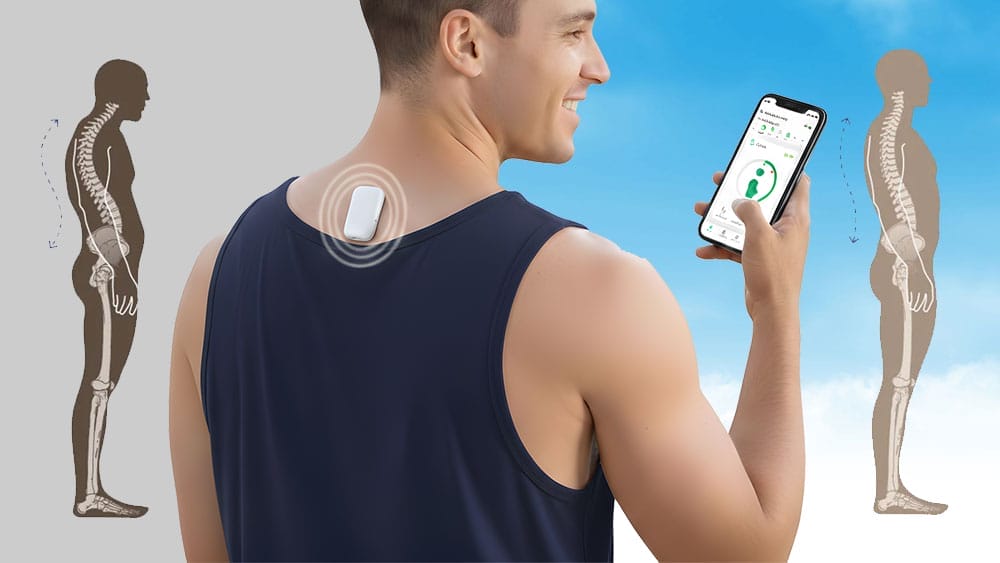
For anyone struggling with text neck or forward head posture, this device offers the path of least resistance toward lasting postural change.
Upright Go 2 Bundle (with Necklace) on Amazon
The Standard model ($89 with 10 adhesive strips) is also available on Amazon.
Footnotes
- Bordoni B, Walkowski S, Morabito B, Varacallo MA. ‘Fascia as a regulatory system in health and disease’. Frontiers in Medicine, Vol. 11, August 2024. https://pmc.ncbi.nlm.nih.gov/articles/PMC11346343/, (accessed 14 Feb. 2026).
- Barzegari S, AllahVerdi M, Valian F, et al. ‘Prevalence of text neck syndrome among university students: systematic review and meta-analysis’. Journal of Public Health, August 2025. https://link.springer.com/article/10.1007/s10389-025-02565-3, (accessed 14 Feb. 2026).
- Dr. Jordan Tsai, Dr. Elliot Smithson, Dr. William Duncan. Personal consultations regarding neutral posture and text neck rehabilitation, March-April 2022. See: Text Neck Rehabilitation Article – Acknowledgments.
